India’s Major Office Markets May Require 260 Million Square Feet of Additional Space as Workforce Formalization Expands
A study by Cushman & Wakefield projects that India’s eight largest office markets could need an additional 260 million square feet of space driven by workforce formalization and talent concentration.

- India's top eight office markets may require an additional 260 million square feet of space under a 100 square feet per professional benchmark.
- The baseline model assumes 75 percent formalization in IT, BFSI, and professional services, and 25 percent in other sectors.
- Tier II cities like Kochi, Coimbatore, Indore, and Bhubaneswar are seeing hiring growth at two to three times the pace of Tier I markets.
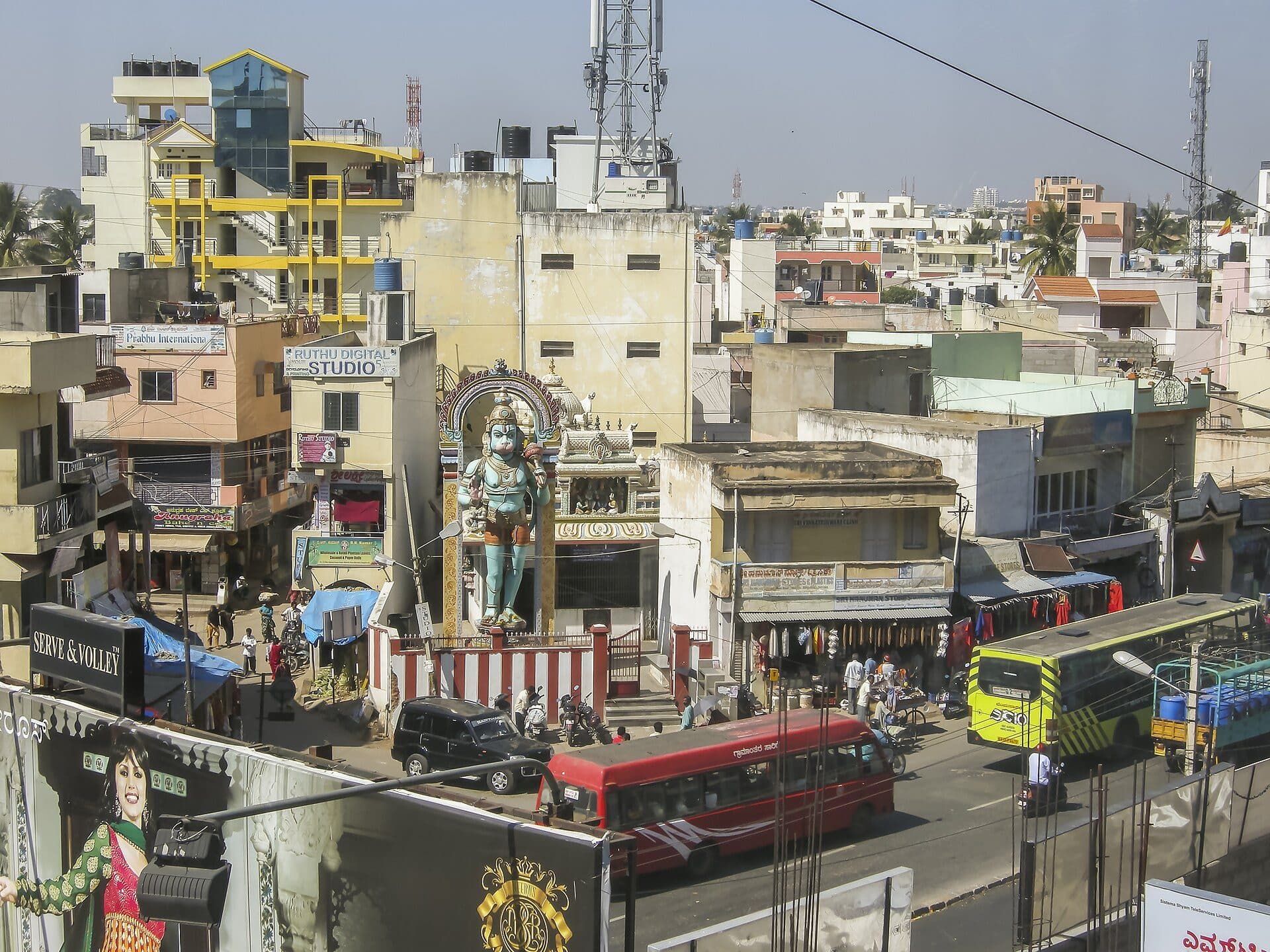
India's eight largest office markets could require approximately 260 million square feet of additional commercial real estate as workforce formalization expands, according to a study released by real estate firm Cushman & Wakefield. The research examined more than 34 million professional profiles across 19 Tier I and Tier II cities to evaluate how hiring activity, talent concentration, and sectoral specialization influence future office space demand. The findings also assess how evolving workforce dynamics, artificial intelligence capabilities, and increasing formalization shape commercial real estate growth.

Currently, the eight largest office markets hold approximately 1,012 million square feet of Grade A and B office inventory, which accommodates 12.7 million professionals at an average density of nearly 80 square feet per person. Under a benchmark of 100 square feet per professional, the same workforce would require roughly 1,272 million square feet, yielding a potential additional requirement of 260 million square feet. This baseline calculation assumes a 75 percent workforce formalization rate in IT, banking, financial services and insurance, and professional services, alongside 25 percent in other sectors, while accounting for office attendance and desk-sharing patterns. The report emphasizes that this figure represents a modeled requirement under specific benchmarks rather than a measurement of currently unavailable inventory.
The study highlights a direct link between hiring activity and office leasing across the country's major urban centers, which collectively house an estimated 29.2 million professionals. Bengaluru leads the talent landscape with 5.78 million professionals, followed by Mumbai with 5.37 million and Delhi NCR with 5.01 million. Hyderabad, Pune, and Chennai follow with professional populations ranging between three and 3.8 million each. Between 2021 and 2025, Bengaluru accounted for about a quarter of job postings and office leasing, Mumbai ranked second in both categories, and Delhi NCR contributed roughly 15 percent of job postings and 18 percent of leasing activity. Conversely, markets like Ahmedabad and Kolkata exhibit notable hiring numbers but more modest leasing due to employment concentrations in sectors with lower formal office requirements.
Sectoral demand closely mirrors these talent pools, with industries boasting larger workforces capturing a greater share of leasing agreements. The IT sector leads both metrics by representing over half of the professional workforce and nearly a third of gross leasing, followed by banking and financial services, engineering and manufacturing, and professional services. Anshul Jain, Chief Executive for India, Southeast Asia, Middle East and Africa, and Asia Pacific Office and Retail at Cushman & Wakefield, noted that India's office market is supported by the structural growth driver of its talent ecosystem.
Emerging Tier II Markets and Future Projections
Beyond major metropolitan areas, 11 analyzed Tier II cities account for nearly 5 million professional profiles and are recording hiring growth at two to three times the pace of Tier I locations. Cities such as Kochi, Coimbatore, Indore, and Bhubaneswar display strong hiring momentum alongside developing quality office infrastructure, making them promising locations for future expansion. Coimbatore is growing as a technology, engineering, and research and development hub, Kochi is strengthening its IT and analytics ecosystem, Jaipur is emerging in financial services and e-commerce, Lucknow focuses on telecom and financial services, and Visakhapatnam centers on healthcare and life sciences. External research cited in the study indicates that select Tier II locations offer operating advantages, including employee attrition rates that are 20 to 30 percent lower and overall employment costs up to 25 percent lower than larger metros.
Workforce formalization adjustments could further shift commercial real estate demand. If formal office participation in non-core sectors increases from 25 percent to 40 percent while core sector assumptions remain unchanged, the potential additional space requirement could climb from 260 million square feet to 348 million square feet. Across all modeled formalisation scenarios, the estimated additional requirement ranges between 81 million square feet and 557 million square feet. Veera Babu, Executive Managing Director for Tenant Representation in India at Cushman & Wakefield, stated that occupiers must plan ahead, identify locations with appropriate skills and infrastructure, and align workplace strategies with evolving business needs.
To address future demand, India's Grade A office development pipeline through 2029 stands at approximately 262 million square feet, which includes 247 million square feet in Tier I markets and 15 million square feet in Tier II cities. While emerging cities currently account for less than one-tenth of the country's Grade A office inventory, improving infrastructure and talent availability are expanding the geographical scope for future business operations.
- Eight major office markets could require 260 million square feet of additional space under modeled density benchmarks.
- Bengaluru, Mumbai, and Delhi NCR hold the largest professional talent pools and lead commercial leasing activity.
- Tier II cities exhibit rapid hiring growth and lower operating costs, attracting future commercial real estate interest.
- India's eight largest office markets could require approximately 260 million square feet of additional commercial real estate as workforce formalization expands, according to a study released by real estate firm Cushman & Wakefield.
Spotted an error? · Our editorial policy
UP NEXTBelarus President Challenges Kremlin’s Historical Justification for Ukraine ConflictSwipe more stories · BusinessQuick cards, a few lines each. Tap to open.More from Business

FSSAI Sanctions Prosecution Against Bisleri Over Water Quality Violations
Bombay High Court Permits Tata Sons Board Meeting While Denying Interim Relief to Tata Trusts
RBI Introduces Amended KYC Norms and SOP for Payment Banks to Combat Financial Frauds