Delhi Air Quality Nears Very Poor Bracket as Calm Surface Winds Trap Pollutants
Delhi’s air quality edged closer to the very poor category on Thursday morning as calm surface winds trapped pollutants near the ground.

- Delhi AQI rose from 282 at 6 am to 289 by 8 am on Thursday
- PM2.5 was the dominant pollutant at 53 of 57 monitoring stations
- Punjab and Haryana recorded 4,928 farm fires since October 1
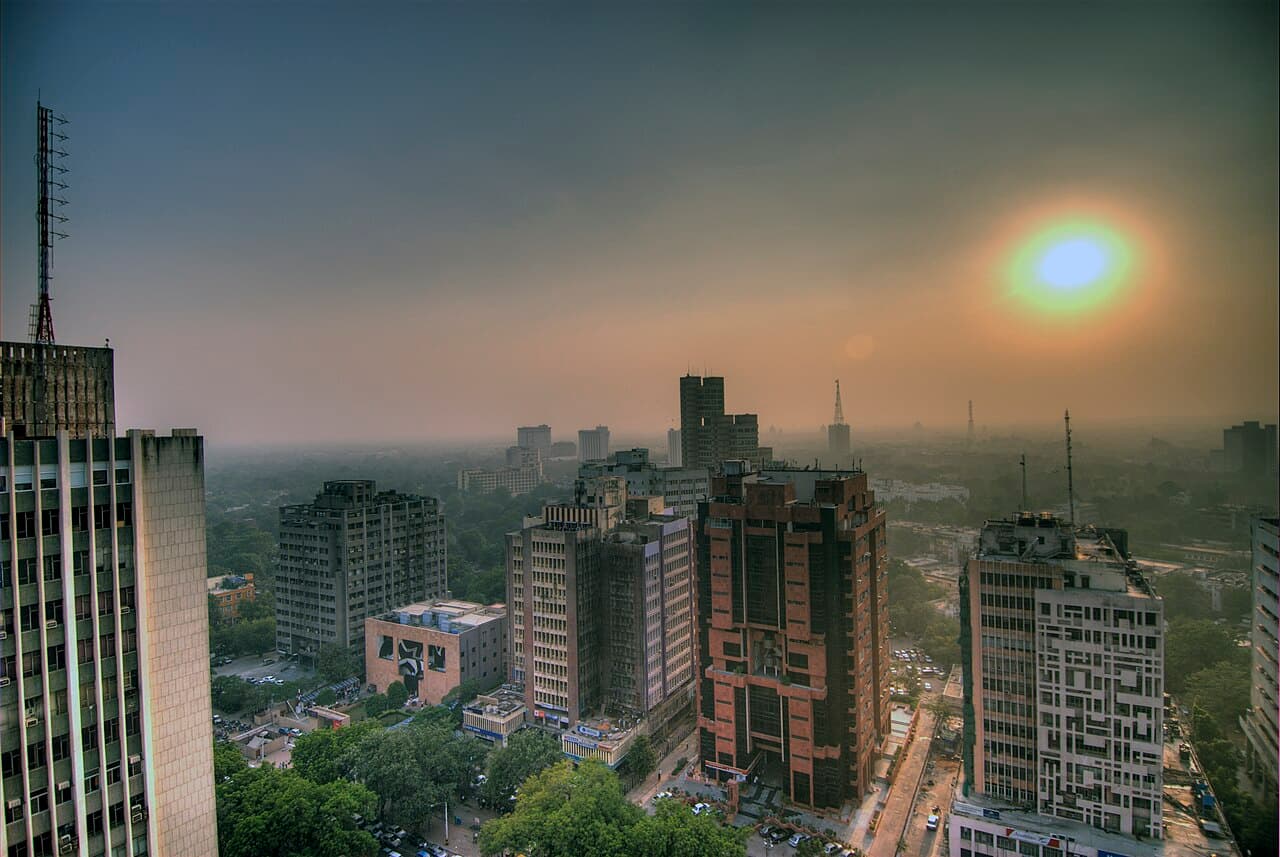
Delhi's air quality remained in the poor category on Thursday morning and drifted closer to the very poor range due to calm surface winds that trapped pollutants close to the ground. According to the Central Pollution Control Board, the hourly air quality index stood at 282 at 6 am, climbed to 286 by 7 am, and reached 289 by 8 am. This marked an increase from the reading of 232 recorded on Wednesday.
Station Readings and Major Pollutants
The Central Pollution Control Board classifies an air quality index between 201 and 300 as poor, and between 301 and 400 as very poor. Out of 57 monitoring stations with valid readings at 7 am, 55 recorded an index above 200, with 20 stations entering the very poor category. Pusa registered the highest station-level index at 366, followed by JNU at 362, Sirifort at 358, NSUT Jaffarpur at 355, and ITO at 354. Fine particulate matter remained the primary pollutant across 53 of the 57 stations at that hour. Weather observations at the Safdarjung airfield noted calm conditions across all 11 readings between Wednesday evening and Thursday morning, restricting the dispersion of pollutants despite upper-level northern winds blowing at 18 kilometres per hour at an altitude between 500 and 1,500 metres.
Government Response and Farm Fires
Satellite data recorded 176 crop-residue burning events across Punjab and Haryana on Wednesday, raising the total count since October 1 to 4,928 fires, comprising 4,458 in Punjab and 470 in Haryana. This cumulative total exceeds the 4,722 fires documented during the equivalent period in the previous year, though satellite tracking often misses late-day burning that occurs after afternoon orbital passes. In response to worsening conditions, Chief Minister Rekha Gupta directed department heads to intensify field checks, enforce dust-control regulations, and monitor pollution hotspots. Secretary-level officers were designated as nodal authorities across all 13 districts to oversee twice-weekly ground inspections covering vehicular emissions, industrial pollution, waste management, and construction activities.
- Delhi air quality index reached 289 by 8 am on Thursday
- Pusa recorded the highest station AQI at 366
- Delhi government stepped up field checks and appointed nodal officers for 13 districts
- Delhi's air quality remained in the poor category on Thursday morning and drifted closer to the very poor range due to calm surface winds that trapped pollutants close to the ground.
Spotted an error? · Our editorial policy
UP NEXTBritish Columbia Premier Lorne Doerkson Inducts Punjabi-Origin MLAs into CabinetOther angles · #air pollution
Timeline →- NewsDelhi’s Air Quality Hits ‘Poor’ at 279 With Several Areas Entering ‘Very Poor’ Zone
- NewsDelhi Schools Resume Physical Classes Following Withdrawal of GRAP Stage-III Restrictions
- NewsCitizens’ Delegation Visits Environment Ministry Office to Demand Air Pollution Action
- NewsDelhi Air Quality Remains Very Poor as Multiple Stations Record Severe Pollution and Fog Settles In
More from India
Ladakh Holds First Local Body Elections Since 2019 Reorganization
YouTuber Remanded to Prison Following Re-enactment of Madurai Jewellery Heist

Khadoor Sahib MP Amritpal Singh Returns to Punjab for Grandmother’s Last Rites