Former US Deputy Secretary of State Strobe Talbott Passes Away at 80
Strobe Talbott, who served as US Deputy Secretary of State and helped repair India-US relations following the 1998 nuclear tests, has died at the age of 80.

- Strobe Talbott passed away at his home in East Hampton, New York, at the age of 80 following a long illness.
- He served as the US Deputy Secretary of State under President Bill Clinton and helped rebuild bilateral ties after India's 1998 nuclear tests.
- Talbott and then External Affairs Minister Jaswant Singh held 14 meetings across seven countries, laying the groundwork for President Clinton's 2000 visit to India.
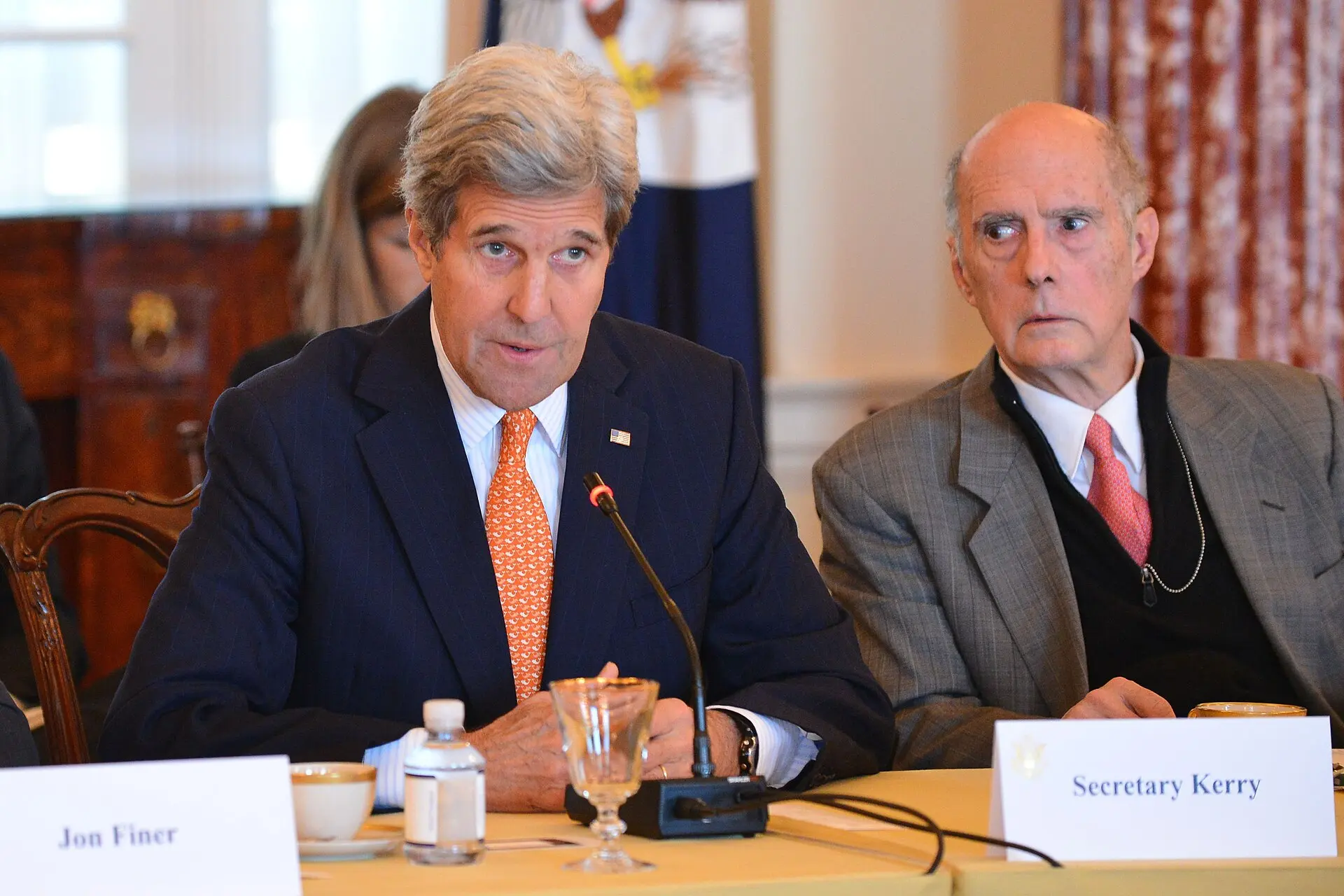
Strobe Talbott, a former American diplomat who helped reshape diplomatic ties between Washington and New Delhi following the 1998 Pokhran nuclear tests, has died. His son, Devin Talbott, stated that the former official passed away on Thursday at his residence in East Hampton, New York, following a prolonged illness. He was 80 years old.
Diplomatic Engagement After 1998 Nuclear Tests
Following India's execution of five nuclear tests in May 1998, the United States responded by imposing sanctions. To address the diplomatic rift, Talbott—then serving as the US Deputy Secretary of State under President Bill Clinton—engaged in extensive negotiations alongside India's then External Affairs Minister, Jaswant Singh. Over a two-year period, the pair conducted 14 meetings across seven countries spanning three continents.
These discussions established the foundation for President Bill Clinton's visit to India in the year 2000, marking the first time a sitting US president traveled to the country in 22 years. The dialogue series subsequently paved the way for a bilateral civil nuclear agreement. During the talks, Talbott pressed for five specific benchmarks from India: signing the Comprehensive Test Ban Treaty, halting fissile material production, showing restraint regarding missile and warhead deployment, tightening export controls, and restarting dialogue with Pakistan.
Reflections on the Negotiations and Career Background
In his book titled Engaging India: Diplomacy, Democracy and the Bomb, Talbott noted that Jaswant Singh successfully deflected American demands for strict timelines without causing friction. Talbott acknowledged that Singh achieved his strategic objectives during the two-and-a-half-year dialogue more effectively than the American side achieved its own.
Born in Dayton, Ohio, in 1946, Talbott initially worked as a journalist for Time magazine, reporting primarily on Soviet-American relations while holding roles such as Washington bureau chief and foreign-affairs columnist. He entered the US State Department in 1994, quickly rising to deputy secretary of state and directing the Clinton administration's policies toward Russia and former Soviet states. Following his government service, he acted as the president of the Brookings Institution from 2002 to 2017 and chaired the Foreign Affairs Policy Board of the US State Department.
- Strobe Talbott died at age 80 after a long illness at his New York home.
- He played a pivotal role in restoring US-India diplomacy following the 1998 nuclear tests.
- His negotiations with Jaswant Singh paved the way for President Clinton's 2000 India visit and a civil nuclear pact.
- He was also a former journalist for Time and led the Brookings Institution from 2002 to 2017.
Spotted an error? · Our editorial policy
UP NEXTLionel Messi Reports Seeking to Restrict AFA Commercial Use of His ImageOther angles · #India-US relations
Timeline →More from World Politics
Bangladesh Speaker Suggests Potential ICJ Action for Sheikh Hasina’s Extradition
Canadian Supreme Court Upholds Quebec’s Public Sector Religious Symbols Ban

Danish Foreign Minister Visits Bengaluru to Expand Tech and Defense Ties with India