Union Cabinet Clears Delimitation-Linked Women’s Reservation Bill Amid Debate Over Lok Sabha Expansion
The Union Cabinet has approved a fresh delimitation-linked women’s reservation bill proposing a uniform 50 percent increase in Lok Sabha seats, sparking debates over representation, population disparities, and the north-south political divide.

- The Union Cabinet cleared a bill for a uniform 50 percent increase in Lok Sabha seats linked to women's reservation.
- Seat allocations have remained tied to the 1971 Census, while India's population has nearly tripled.
- Southern states fear a loss of relative political influence and resources despite the proposed 2051 freeze on seat shares.
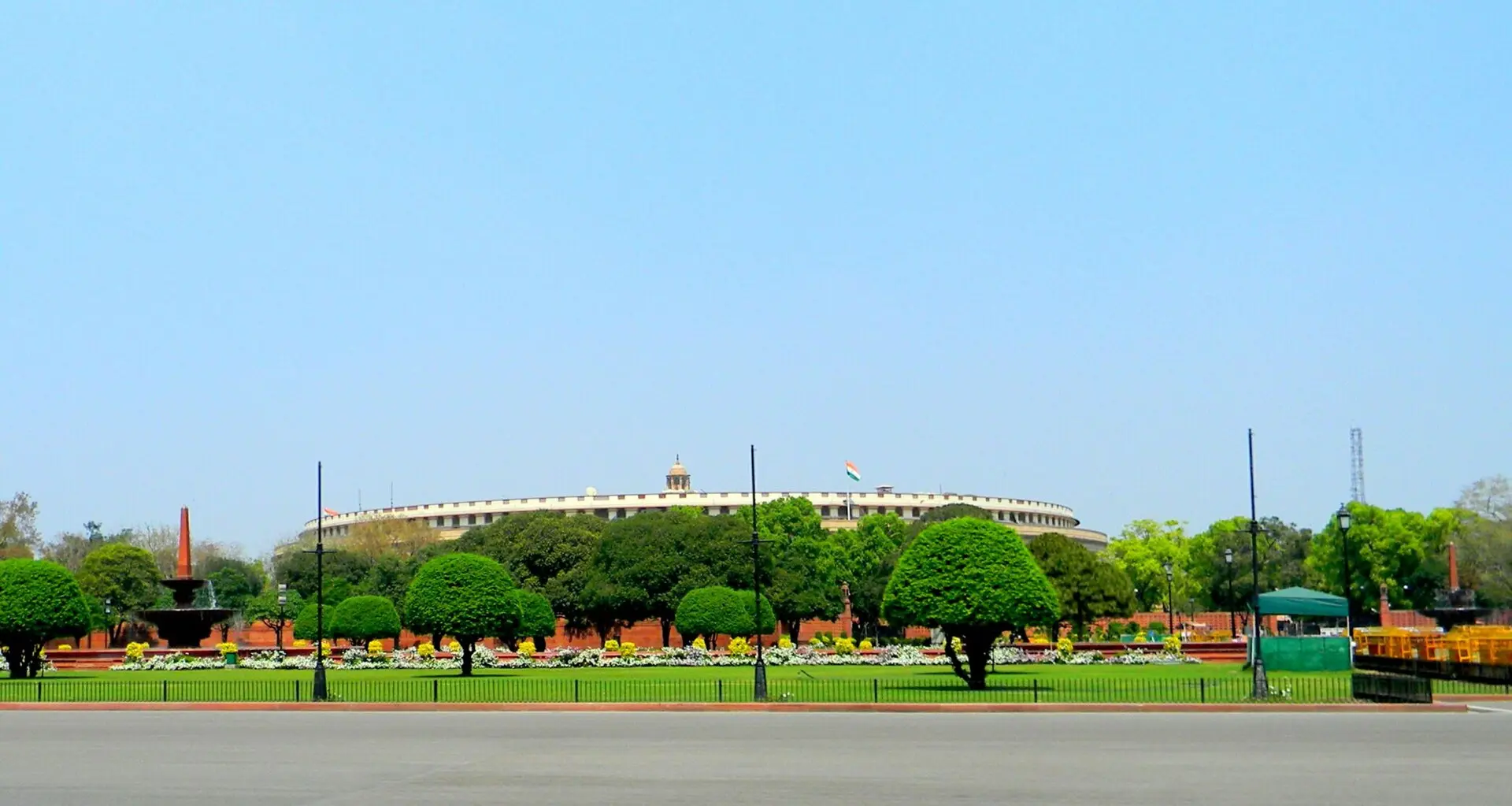
The Union Cabinet cleared a fresh delimitation-linked women's reservation bill designed to introduce a uniform 50 percent expansion in Lok Sabha seats across all states. This legislative measure is expected to be introduced during a special parliamentary sitting scheduled for the following week. Proponents of the expansion argue that it facilitates the rollout of the women's quota in 2029 while addressing population growth since the current seat allocation was established based on the 1971 Census, when India's population was approximately 55 crore.
Representation Disparities and the Proposed Expansion
According to a research paper published by the Carnegie Endowment for International Peace, Indian members of parliament represent significantly more citizens on average than lower house legislators anywhere else globally. The average parliamentary constituency currently encompasses a population of roughly 27 lakh people. Implementing a 50 percent expansion of the Lower House would decrease that average to approximately 18 lakh people per constituency. Authors Louise Tillin, Milan Vaishnav, and Andy Robaina noted that despite this reduction, Indian constituencies would still hold more than twice the population of a United States congressional district. Supporters argue that smaller constituencies would improve voter accessibility and allow MPs to focus more effectively on local community issues.
The North-South Divide and State Representation
Article 81 of the Constitution establishes a principle advocating for a uniform population-to-seat ratio across all states where practicable. However, seat allocations were frozen in 1976 under the Indira Gandhi administration based on the 1971 Census to prevent penalizing states that successfully managed population control. This freeze was subsequently extended in 2001 by the Atal Bihari Vajpayee government until the publication of census data gathered after 2026. Consequently, uneven population growth has generated substantial imbalances in parliamentary representation. Data from the 2011 Census indicates that an MP from Bihar represents about 26 lakh people and an MP from Uttar Pradesh represents roughly 25 lakh people, whereas an MP from Tamil Nadu represents 18.5 lakh people and one from Kerala represents 16.7 lakh people.
Political parties rooted in southern states have expressed concern that population-based redistribution would diminish their proportional share and reduce their influence over national policymaking and federal financial resource distribution. To mitigate these concerns, the government's current proposal includes a uniform 50 percent seat increase for every state alongside an extension of the freeze on relative state shares until 2051. Neither safeguard featured in a previous constitutional amendment bill that was defeated in April, despite prior government assurances. Critics, including Congress general secretary Jairam Ramesh, questioned the fairness of a pro rata increase during the debates in April, pointing out that it would widen numerical gaps between states like Uttar Pradesh and Kerala. Furthermore, authors of the Carnegie paper observed that a uniform expansion fails to correct underlying representation disparities between northern and southern states.
Gerrymandering Concerns and the Women's Quota Integration
Opposition parties have raised apprehensions regarding potential gerrymandering, citing previous delimitation processes conducted in Assam and Jammu and Kashmir. Leader of the Opposition Rahul Gandhi accused the ruling Bharatiya Janata Party of attempting to manipulate electoral boundaries to secure strategic advantages ahead of the 2029 general elections. The government has firmly rejected these allegations. Additionally, questions persist regarding how constituency boundaries will be redrawn internally within individual states even if overall state shares remain protected.
Linking the expansion to the women's reservation policy is intended to alleviate political pressures on political parties when fielding women candidates. In the existing 543-member Lok Sabha, introducing a women's quota would leave approximately 362 seats open to candidates of any gender. Expanding the House to roughly 815 seats would preserve approximately 543 unreserved seats for both male and female candidates. The opposition Congress party has criticized the decision to couple the women's reservation bill with a sweeping expansion, demanding instead that the quota be implemented within the existing structure of the House. Meanwhile, the Samajwadi Party has advocated for dedicated representation for Other Backward Classes and Muslim women within the quota framework.
Censuses and Implementation Timelines
The government maintains that waiting for the completion of a fresh census and subsequent delimitation exercises could jeopardize the planned implementation of the women's quota in 2029. Conversely, opposition critics have questioned the wisdom of executing a long-term electoral restructuring using population data that will be 18 years old by the time the next general elections occur.
- Cabinet approved a bill proposing a 50 percent rise in Lok Sabha seats tied to women's reservations.
- Current seat distribution relies on the 1971 Census, creating large representation gaps between states.
- Southern parties worry about losing national influence despite a proposed freeze on relative seat shares until 2051.
- The Union Cabinet cleared a fresh delimitation-linked women's reservation bill designed to introduce a uniform 50 percent expansion in Lok Sabha seats across all states.
Spotted an error? · Our editorial policy
UP NEXTBelarus President Challenges Kremlin’s Historical Justification for Ukraine ConflictOther angles · #Delimitation
Timeline →- NewsGovernment Proposes New Delimitation Legislation to Implement Women’s Reservation
- NewsShashi Tharoor Criticizes DMK Over Stance on Proposed Delimitation and Lok Sabha Seat Increase
- NewsNCP(SP) Issues Three-Line Whip for Special Parliament Session as Delimitation Debate Looms
- NewsTamil Nadu Political Row: TVK Alleges DMK-BJP Alliance, DMK Strongly Denies
More from Indian Politics
Government Plans Three Legislative Measures for Women’s Quota and House Seat Expansion
Government Proposes New Delimitation Legislation to Implement Women’s Reservation
Supriya Sule to Skip INDIA Bloc Meeting Due to Sharad Pawar’s Hospitalisation