Supreme Court Considers Strict BS-VI Vehicle Mandate for Delhi-NCR Amid Winter Pollution Hearings
During ongoing hearings on air pollution in Delhi and the National Capital Region, the Supreme Court suggested that only BS-VI compliant vehicles should be permitted to operate in the capital.

- The Supreme Court suggested that only BS-VI compliant vehicles should be allowed to operate in Delhi.
- The bench proposed a five-year roadmap to prevent polluting commercial vehicles from entering Delhi while maintaining essential supplies via border warehousing.
- The court directed neighboring states Haryana, Uttar Pradesh, and Rajasthan to submit status reports on their pollution control measures.
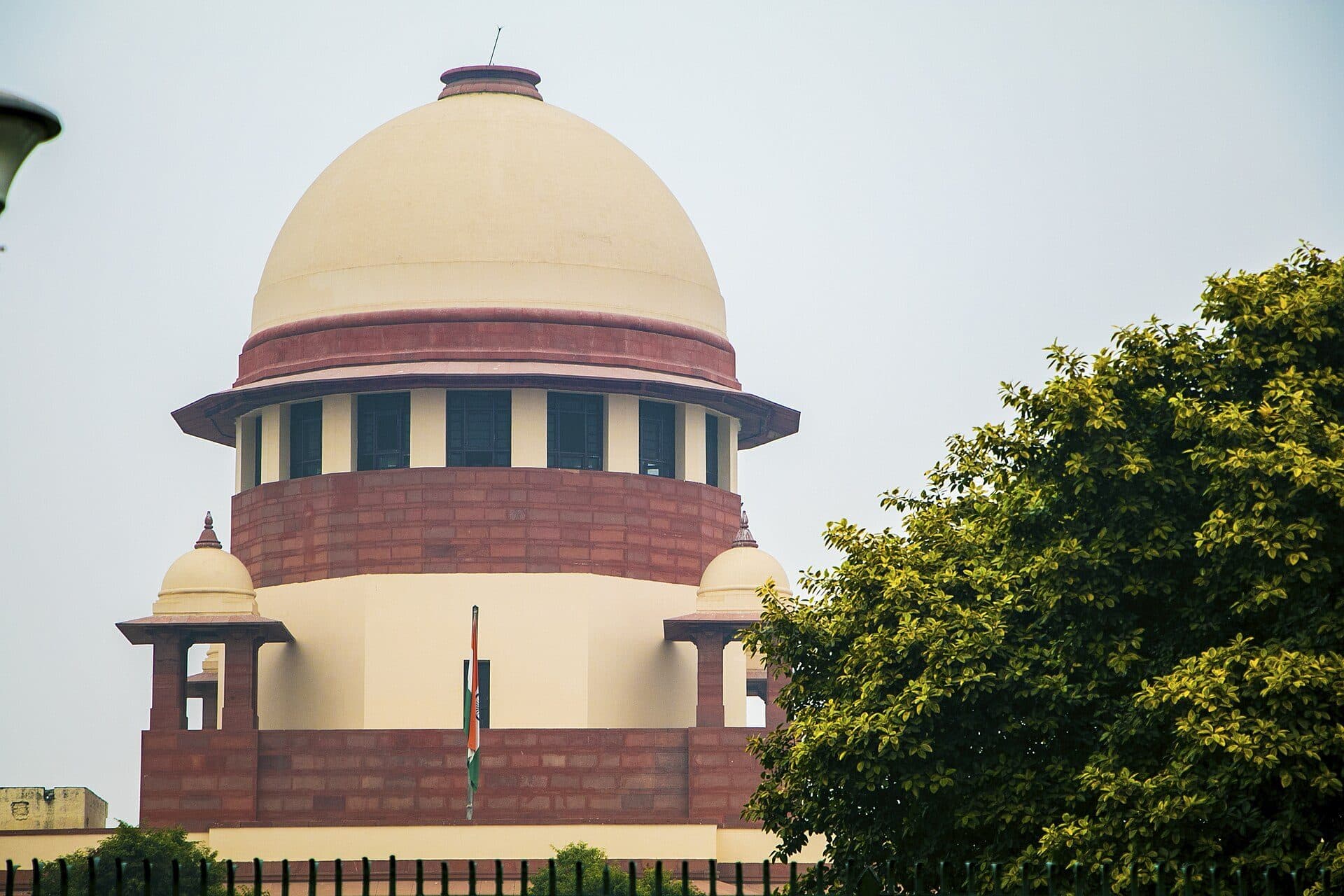
The Supreme Court on Monday stated that only vehicles complying with BS-VI emission standards should be permitted to operate in Delhi, highlighting the measure as a vital step in addressing the capital's recurring air pollution crisis during the winter months. A bench comprising Chief Justice of India Surya Kant and Justices Joymalya Bagchi and V Mohana made the observation while hearing ongoing suo motu proceedings concerning air quality in Delhi and the National Capital Region.
The judicial discussion unfolded as the bench examined the impact of vehicular emissions and current enforcement frameworks. When Additional Solicitor General Aishwarya Bhati, appearing for the Commission for Air Quality Management, pointed to various administrative efforts aimed at curbing pollution, the bench remarked that favorable meteorological conditions had primarily kept severe pollution at bay this November. The court noted that favourable winds had prevented pollutants from accumulating near the surface, though it acknowledged that air quality has continued to fluctuate between the poor and very poor categories.
During the proceedings, advocate Rakesh Khanna raised a grievance on behalf of a Volvo vehicle owner whose 15-year-old vehicle was being denied fuel despite a prior court protection order for BS-IV models. In response, Justice Joymalya Bagchi suggested that the capital should restrict access exclusively to BS-VI vehicles. The bench elaborated that such a requirement should eventually be extended across the entire NCR region, noting that neighbouring states must also actively contribute to mitigating the pollution burden.
Addressing the broader long-term challenge of vehicular entry, Chief Justice Surya Kant questioned how authorities might altogether prevent polluting commercial vehicles from entering Delhi over a five-year horizon without disrupting the supply of essential commodities. The bench proposed exploring logistics alternatives, such as establishing warehousing facilities at city borders where goods could be unloaded and transferred into cleaner, non-polluting or battery-operated transport for delivery within the city.
To ensure coordinated regional compliance, the court indicated that it would require the advocate generals of neighbouring states—including Haryana, Uttar Pradesh, and Rajasthan—to appear and submit status reports detailing their respective mitigation measures. Senior advocate Aparajita Singh is assisting the court as amicus curiae in the matter.
Current Regulatory Framework and Source Apportionment
The judicial focus on vehicular emissions aligns with existing seasonal restrictions implemented by the local administration. Under current Delhi government regulations enforced between November 1 and January 31, vehicles registered outside the capital that comply only with BS-IV or older norms are barred from entering. This prohibition targets commercial goods vehicles, including light, medium, and heavy goods vehicles, alongside buses, while exempting CNG, electric, and designated emergency vehicles.
Authorities have deployed enforcement personnel and automatic number plate recognition cameras at major boundary points such as DND, Rajokri, Ghazipur, Singhu, Tikri, and Badarpur to monitor compliance. Meanwhile, scientific estimates from the Indian Institute of Tropical Meteorology’s Air Quality Early Warning System for November 23 attributed approximately 21.5 percent of Delhi's PM2.5 pollution to local transport, while estimating that external sources accounted for roughly 60 percent of the particulate load.
- The Supreme Court advocated limiting Delhi vehicular traffic strictly to BS-VI emission standards.
- Authorities are utilizing monitoring cameras and enforcement teams at major entry points to restrict older commercial vehicles.
- Legal proceedings will involve status reports from neighboring states to address trans-boundary pollution sources.
- The Supreme Court on Monday stated that only vehicles complying with BS-VI emission standards should be permitted to operate in Delhi, highlighting the measure as a vital step in addressing the capital's recurring air pollution crisis during the winter months.
Spotted an error? · Our editorial policy
UP NEXTJensen Huang Reinstated as Nvidia Chief Executive After Eleven-Day AbsenceOther angles · #air pollution
Timeline →- NewsCAQM Introduces District-Level Plans and 2027 Pollution Reduction Targets for Delhi-NCR
- NewsDelhi’s Air Quality Hits ‘Poor’ at 279 With Several Areas Entering ‘Very Poor’ Zone
- NewsDelhi Air Quality Nears Very Poor Bracket as Calm Surface Winds Trap Pollutants
- NewsDelhi Schools Resume Physical Classes Following Withdrawal of GRAP Stage-III Restrictions
More from Environment

COP31 Becomes Longest UN Climate Summit Amid Deadlock Over Fossil Fuel References

UN Climate Negotiations in Turkey Near Collapse Without Final Agreement
Delhi Records Season’s Coldest Morning as Air Quality Remains in ‘Poor’ Category