Supreme Court Rules Criminals with Past Convictions Cannot Claim Bail Solely on Speedy Trial Right
The Supreme Court ruled that individuals with criminal records and previous convictions cannot secure bail solely based on their right to a speedy trial when facing serious charges.

- Supreme Court ruled individuals with previous convictions cannot get bail solely on speedy trial rights
- Bench of Justices Prashant Kumar Mishra and Shree Chandrashekhar issued the order on November 18
- The accused concealed a prior conviction involving an attempt to murder the same victim
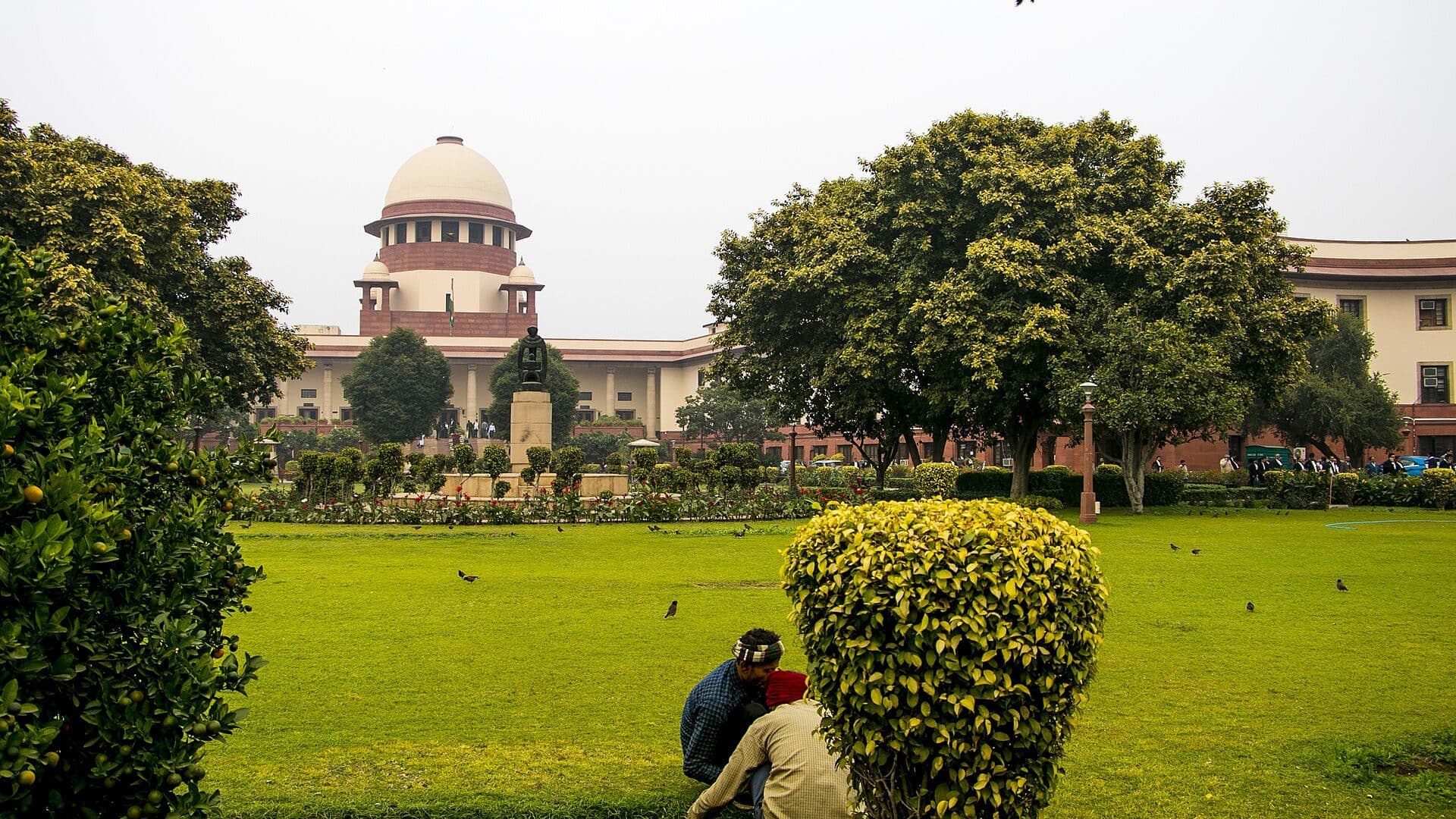
The Supreme Court of India ruled that individuals with criminal antecedents and prior convictions cannot be granted bail solely on the basis of their right to a speedy trial. A bench comprising Justices Prashant Kumar Mishra and Shree Chandrashekhar delivered the observation in an order issued on November 18, setting aside a previous directive from the Punjab and Haryana High Court that had released an accused individual in a murder case.
Balancing Constitutional Rights and Societal Interests
Addressing the scope of personal liberty, the bench noted that while the right to a speedy trial constitutes a vital facet of Article 21 of the Constitution of India, courts must simultaneously weigh individual rights against broader societal interests. This balance includes protecting the welfare of victims and their families, particularly when an accused faces charges for heinous offenses or a series of criminal acts. The apex court emphasized that judicial forums bear a duty to ensure bail orders are not secured through incorrect statements or the concealment of material facts.
Concealment of Prior Convictions in High Court Proceedings
The Supreme Court examined an appeal filed by the father of the deceased, who challenged the High Court's January 2026 order granting bail because the accused had spent over five years in custody. According to the bench, neither the prior conviction of the accused nor his wider criminal involvement had been properly brought to the attention of the High Court during the initial bail hearings. The top court pointed out that the accused explicitly stated in two places within his bail petition that he was involved in no other cases, thereby concealing a previous conviction for attempting to take the life of the exact individual who later became the victim in the current murder case. Furthermore, records indicated that the latest crime was perpetrated while the accused was out on bail for the prior attempt-to-murder offense.
Court Directives and Surrender Mandate
Finding that the High Court erred in releasing the accused under such circumstances, the apex court allowed the complainant's appeal and revoked the bail order entirely. The bench further directed the accused individual to surrender before the appropriate court within a period of one week.
- Individuals with criminal records cannot claim bail purely on speedy trial grounds
- Courts must weigh speedy trial rights against societal interests and victim safety
- Concealing past convictions invalidates bail relief granted by lower courts
- The Supreme Court of India ruled that individuals with criminal antecedents and prior convictions cannot be granted bail solely on the basis of their right to a speedy trial.
Spotted an error? · Our editorial policy
UP NEXTLionel Messi Reports Seeking to Restrict AFA Commercial Use of His ImageOther angles · #bail
Timeline →More from Indian Politics

Supriya Sule to Skip INDIA Bloc Meeting Due to Sharad Pawar’s Hospitalisation

Shashi Tharoor Criticizes DMK Over Stance on Proposed Delimitation and Lok Sabha Seat Increase

Congress Invites DMK to Opposition Strategy Meeting Amid Delimitation Bill Concerns