Supreme Court Proposes Restricting Delhi Vehicles to BS-VI Standards to Fight Pollution
The Supreme Court indicated it is considering allowing only BS-VI-compliant vehicles to operate in Delhi and explored a five-year roadmap to phase out heavy commercial vehicles.

- Supreme Court indicated it may allow only BS-VI vehicles to operate in Delhi.
- Court suggested a five-year plan to halt heavy commercial vehicle entry using border warehouses and electric transport.
- CJI ordered status quo on BS-IV vehicle restrictions for at least one month.
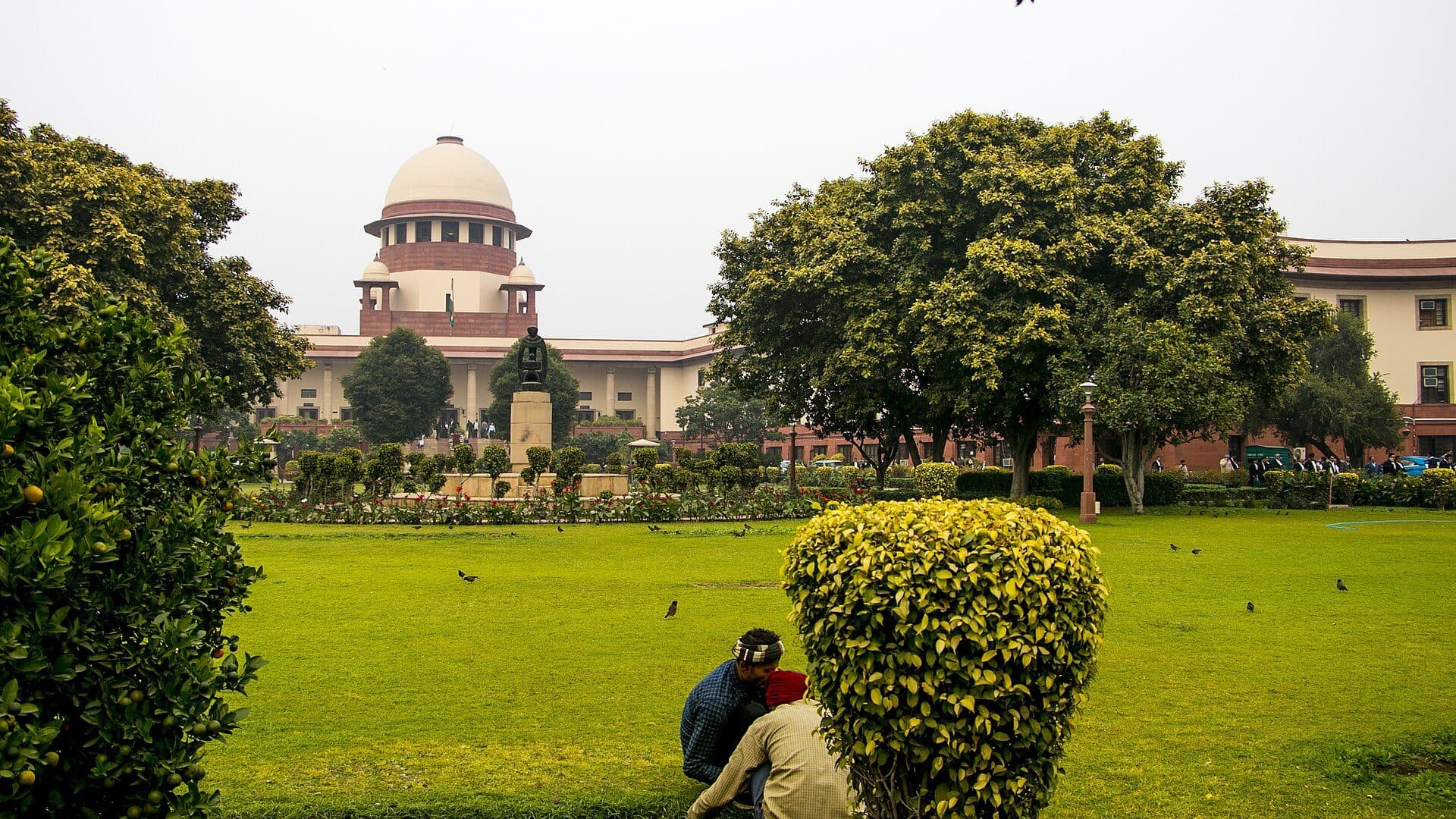
The Supreme Court indicated during a hearing on Monday that it is considering permitting only BS-VI-compliant vehicles to operate in Delhi, or potentially across the entire National Capital Region, as part of measures to tackle severe air pollution. Justice Joymalya Bagchi stated during the proceedings that the bench is clear about restricting operations to BS-VI vehicles if broader regional enforcement is not immediately feasible.
The observations emerged as the bench reviewed vehicular emission restrictions, difficulties encountered by owners of BS-IV vehicles in securing Pollution Under Control certificates, and related fuel access issues. Addressing these immediate concerns, Chief Justice of India Surya Kant noted that the court would maintain status quo on the matter for at least one month without immediate intervention.
Long-Term Roadmap for Commercial Vehicles
To address persistent vehicular pollution, the bench explored a five-year plan aimed at preventing polluting commercial vehicles from entering the capital. Chief Justice Kant suggested establishing peripheral warehouses along Delhi's borders where essential goods could be offloaded. From these storage points, daily necessities such as vegetables and fruits could be transported into the city using battery-operated or other non-polluting transport alternatives.
While outlining this long-term framework, the bench cautioned against an immediate blanket ban on commercial vehicles, emphasizing that supplies of daily essentials must remain uninterrupted to avoid severe consequences for residents. The court noted that a complete transition requires careful phased planning over an extended period.
Accountability for Neighbouring States
The Supreme Court also scrutinized the role of surrounding administrations in combating regional smog, questioning why neighbouring states have only passively participated in mitigation efforts. The bench directed the Advocates General of Punjab, Haryana, Uttar Pradesh, Rajasthan, and Delhi to appear at the next hearing and ordered these state administrations to submit detailed status reports on actions taken to reduce particulate pollution.
Additionally, the court examined expert findings from the Commission for Air Quality Management regarding deteriorating air quality factors and questioned the Municipal Corporation of Delhi over the administrative presentation submitted to the bench. The proceedings were subsequently adjourned for further evaluation of short-term and long-term judicial directions.
- The Supreme Court evaluated strict vehicle emission limits to combat worsening air pollution in the national capital.
- A five-year strategy was proposed to replace heavy commercial truck entry with border storage and non-polluting transport.
- Neighbouring states were ordered to provide formal status reports detailing their pollution control actions.
- The Supreme Court indicated during a hearing on Monday that it is considering permitting only BS-VI-compliant vehicles to operate in Delhi, or potentially across the entire National Capital Region, as part of measures to tackle severe air pollution.
Spotted an error? · Our editorial policy
UP NEXTBJP and Samajwadi Party Trade Barbs Over Religious Symbolism Ahead of 2027 UP PollsOther angles · #BS-VI vehicles
Timeline →More from India

Prime Minister Modi Attends Shabad Kirtan in Delhi Ahead of Guru Nanak Dev’s Parkash Purab
Five Delhi Police Personnel Injured in Knife Attack at Jama Masjid Station
Excavator near high-risk Sheshnag Lake in Jammu and Kashmir triggers political and environmental outrage