India Prohibits Export of Lithium-Ion Battery Black Mass to Boost Domestic Recycling
The Indian government has shifted the export policy for lithium-ion battery black mass from free to prohibited with immediate effect to secure critical minerals for domestic refiners.

- India changed the export policy for lithium-ion battery black mass from free to prohibited.
- The measure aims to provide adequate feedstock for domestic recyclers and refiners.
- Black mass contains essential minerals like lithium, cobalt, nickel, and manganese.
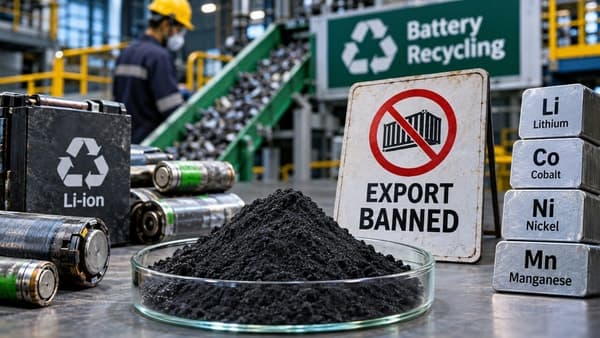
The government of India has officially prohibited the export of lithium-ion battery black mass, shifting its regulatory status from 'Free' to 'Prohibited' with immediate effect. Issued through a notification by the Directorate General of Foreign Trade, the measure is designed to retain essential secondary resources within the country, ensuring that materials generated from discarded batteries and manufacturing scrap are processed locally.
Securing Raw Materials for Domestic Recyclers
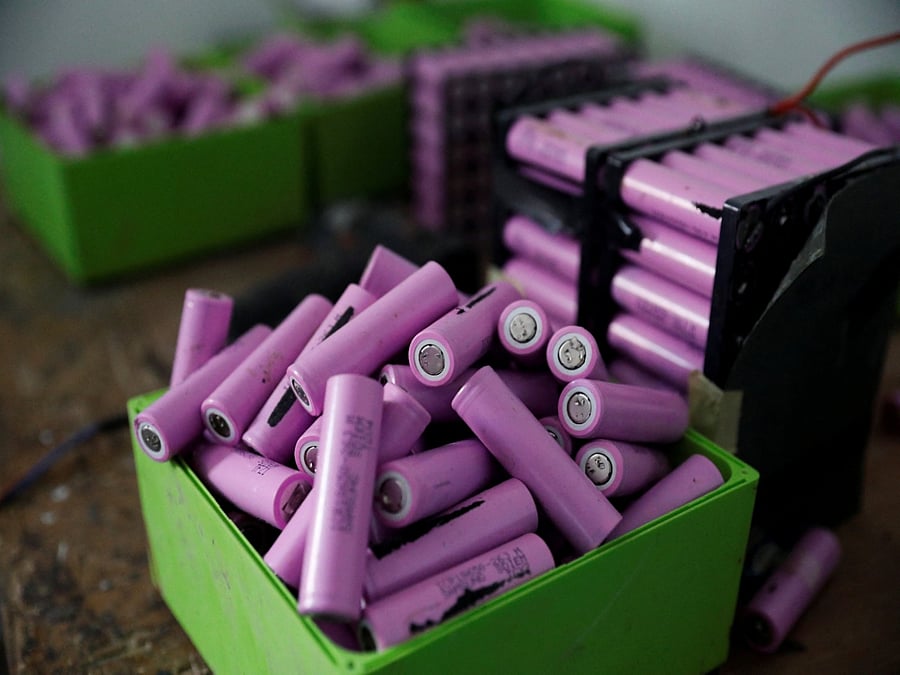
Black mass is a powdery intermediate substance created by shredding end-of-life lithium-ion batteries and production waste after removing larger plastic and metal elements. It contains valuable quantities of critical minerals such as lithium, cobalt, nickel, manganese, and graphite. Officials noted that while national capacity for recycling battery waste has expanded, local processing units have suffered from insufficient feedstock availability because domestically generated black mass was being sent to overseas markets.
Reducing Import Dependence and Foreign Exchange Outgo
By keeping the material inside the country, authorities intend to improve capacity utilization for domestic recycling facilities, encourage new investments, and generate employment. The restriction is expected to increase the domestic recovery of crucial minerals, thereby decreasing reliance on foreign imports and reducing foreign exchange outflows. According to a trade research group, although shipments abroad were minimal during the previous financial year, the government acted proactively to secure future feedstock for domestic refiners.
Supporting Clean Energy and Environmental Goals
The prohibition aligns with broader national strategies, including the National Critical Mineral Mission and its incentive scheme aimed at building secondary processing capacity. Officials emphasized that recycling waste domestically supports a circular economy and urban mining practices, reducing overall reliance on primary mining. Furthermore, keeping the material local ensures that hazardous battery waste is treated safely within national borders under established environmental regulations.
- The Directorate General of Foreign Trade issued the export prohibition effective immediately.
- Local processing facilities were underutilized due to a shortage of domestic raw materials being diverted abroad.
- The move supports clean energy supply chains, urban mining, and the National Critical Mineral Mission.
Spotted an error? · Our editorial policy
UP NEXTNetanyahu’s Office Rejects Claims of Tense Phone Call With Trump Over Iran StrategyMore from Business

Zee Entertainment Board Approves ₹600 Crore Share Buyback at ₹91 Per Share
Andhra Pradesh Plans Investment Protection Law to Shield Businesses from Political Shifts
Bharat Forge subsidiary unveils 120mm Rapid Attack Mortar System for armed forces