Garment Factory Protests Disrupt Traffic and Production Across Bangladesh
Apparel workers clashed with security forces and blocked major highways in industrial zones, pressing demands for higher minimum wages amid ongoing economic strain.

- Garment workers clashed with police and blocked highways in Dhaka, Savar, and Ashulia demanding wage increases.
- Protesters want minimum monthly pay raised from Tk 12,500 to Tk 30,000 to cope with rising living costs.
- The Minimum Wage Board is reviewing pay structures, with a revised scale expected to take effect in December.
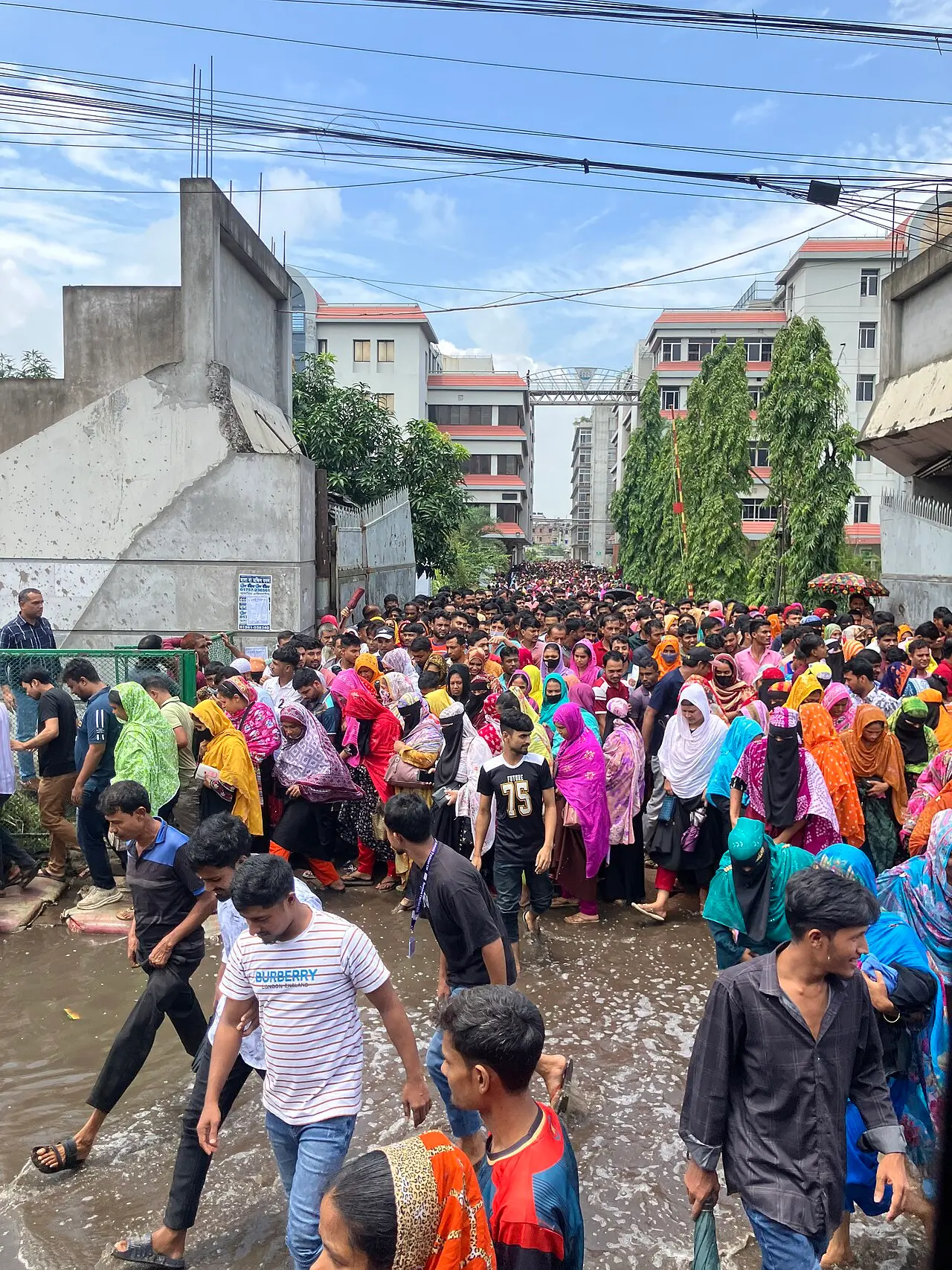
Photo: This work was made by Nahid Sultan and released un / Wikimedia Commons (CC BY-SA 4.0)
Garment employees in manufacturing zones across Bangladesh engaged in street demonstrations and clashes with law enforcement personnel on Tuesday. Protesters gathered in neighborhoods of Dhaka alongside the industrial hubs of Savar and Ashulia to advocate for increased financial compensation. Security officers deployed tear gas canisters and sound grenades to break up gatherings after demonstrators placed blockades across primary transport routes.
Highway Disruptions and Industrial Impact
In Savar, workers obstructed the Dhaka-Aricha Highway within the Fulbaria sector during the late morning hours, bringing vehicular movement to a halt. Commuters experienced extensive traffic delays in both directions before the blockade cleared. Similar confrontations emerged near Hemayetpur, along with sections of Ashulia where participants set rubber tires and debris ablaze to obstruct pathways. Security personnel, supported by paramilitary Border Guard Bangladesh units, responded with chemical irritants and concussive devices.
The labor friction disrupted daily production schedules throughout the manufacturing sector. Multiple facilities suspended activities entirely, while several others declared unplanned holidays or experienced internal walkouts. Factory owners expressed concern that ongoing disruptions during peak manufacturing intervals for upcoming seasonal orders could jeopardize international shipments and buyer relations.
Wage Negotiations and Background
The demonstrations stem from sustained dissatisfaction regarding current earnings, with personnel seeking a monthly baseline adjustment from the present twelve thousand five hundred taka up to thirty thousand taka. Employees pointed to escalating costs covering nourishment, residential rent, medical care, and transit. Bangladesh operates as a major global apparel supplier, supporting millions of jobs and accounting for a vast majority of national export revenue while catering to international brands including Gap, H&M, and Zara.
State authorities established a Minimum Wage Board at the beginning of November to formulate updated payment schedules following earlier labor actions. Although a session was postponed, officials anticipate finalized figures during November, with implementation planned for the start of December. Meanwhile, political friction surrounds the labor unrest, with governing party representatives and advisors accusing former leadership of orchestrating instability following the administration change in August 2024.
- Demonstrators blocked the Dhaka-Aricha Highway and burned tires, prompting police and paramilitary forces to use tear gas and sound grenades.
- Several factories were forced to close or announce holidays during the industrial unrest.
- The apparel sector accounts for over 80 percent of the nation's export earnings and employs more than four million workers.
Spotted an error? · Our editorial policy
UP NEXTIndia Takes Commanding 118-Run Lead Against New Zealand on Day 3 of First TestOther angles · #Bangladesh
Timeline →- NewsIndia Supports Rohingya Repatriation Following Historic ICJ Genocide Ruling Against Myanmar
- NewsIndia Declines Comment on Bangladesh Leader’s Remarks Regarding Alleged Conspiracies
- NewsBangladesh Deploys Paramilitary Forces Amid Surge in Political Violence
- NewsViolence and Arson Escalates Across Bangladesh as Banned Awami League Launches Nationwide Shutdown