France Faces Deepening Civil Unrest Amid Anti-Government Protests and High Living Costs
Widespread protests over living costs and strained public services have sparked intense civil unrest across France, leading to thousands of arrests, property damage, and heightened political pressure on President Emmanuel Macron’s administration.

- Nationwide protests erupted over living costs, strained public services, and school conditions.
- More than half a million people demonstrated on October 17, with 110,000 in Paris alone.
- Police and interior ministry records show 161 investigations into alleged officer violence against protesters.
Demonstrations erupted across France following months of growing public frustration over escalating living costs and deteriorating public services. Government officials attributed much of the violence to far-left radicals and opportunistic delinquents who allegedly hijacked peaceful assemblies to target state institutions. However, critics point out that the heavy-handed security response, characterized by extensive arrests and police confrontations, has deepened anti-government sentiment ahead of the upcoming presidential election.
Roots of the Movement and Student Protests
The unrest began in September with localized demonstrations regarding conditions inside state-run secondary schools. The arrest of nearly seven thousand minors during school blockades drew sharp criticism from international human rights experts, who deemed the measures disproportionate. Images of riot police using batons against teenage demonstrators galvanized broader public backing. Parents, teachers, trade unionists, and left-wing politicians soon joined the student marches to voice shared grievances.
Resurgence of Yellow-Vest Demonstrations
Nationwide mobilizations intensified significantly on October 17, drawing a resurgence of anti-establishment demonstrators reminiscent of the yellow-vest movement that challenged President Emmanuel Macron's administration over fuel prices in previous years. More than half a million individuals participated nationally, with 110,000 demonstrators gathering in Paris alone. The sheer scale of the turnout overwhelmed law enforcement agencies, resulting in authorities losing control of multiple neighborhoods in Paris, Marseille, and Lyon.
Impact on Public Spaces and Cultural Events
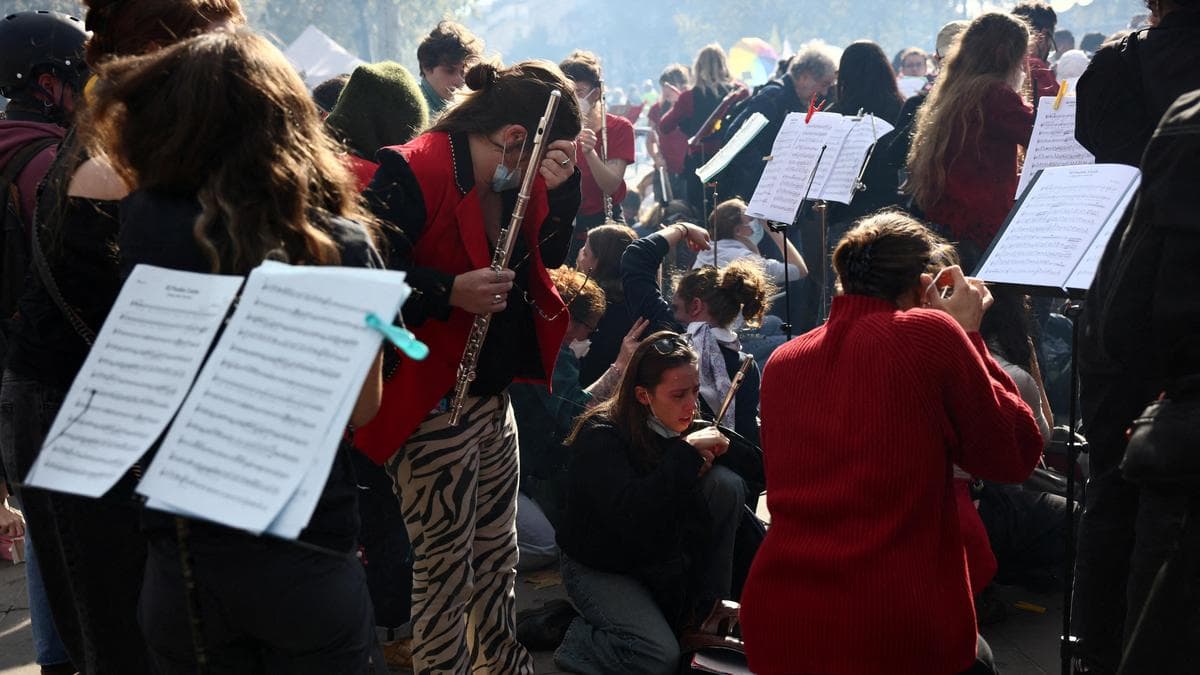
As crowds gathered at Paris's Place de la Republique before scheduled marches, cultural groups found themselves caught in the chaos. The 400-piece classical ensemble Orchestre du Nouveau Monde was warming up with theme music when tear gas deployment began dispersing participants. Although musicians initially continued playing, subsequent canisters forced the orchestra to abandon the square as clashes escalated along surrounding thoroughfares.
Escalating Violence and Law Enforcement Struggles
Throughout the afternoon and evening of October 17, rioters erected barricades, shattered storefront statistics, and set fire to vehicles and bicycles. Security forces faced intense resistance, including projectile attacks involving paving stones, bottles, and mortar-style fireworks. In Paris, an internal police watchdog opened an investigation into an incident where officers beat a man to the ground, an event that fueled unfounded social media rumors regarding his death.
Looting and Widespread Property Damage
The unrest resulted in severe commercial destruction, with approximately 3,000 businesses ransacked within a 24-hour period across various urban centers. Establishments ranging from major supermarkets to luxury boutiques suffered extensive looting as night fell. Far-right factions entered the fray by October 24, claiming they intended to protect local enterprises, which only served to generate further street battles with protesters.
Official Responses and Police Accountability
Interior Minister Laurent Nunez acknowledged that authorities failed to anticipate the magnitude of the October 17 violence, which overwhelmed the initial security deployment. The ministry subsequently mobilized 70,000 police officers and paramilitary gendarmes for later demonstrations. Interior Ministry figures indicate that internal watchdogs initiated 161 separate investigations into allegations of excessive police force since September.
Political Implications for President Macron
The ongoing crisis presents a formidable challenge for President Macron, who announced he will not seek re-election. Strained public finances restrict the government's ability to satisfy protesters' economic demands, while his centrist coalition lacks a reliable legislative majority. Although officials have proposed educational reforms and accelerated minimum-wage increases to appease the public, major labor unions and student representatives maintain that these concessions are insufficient.
- Demonstrations began over school conditions and expanded into general anti-government protests.
- Security forces were overwhelmed on October 17 as over half a million people marched nationwide.
- Approximately 3,000 businesses were looted or damaged during the peak of the unrest.
- Interior Ministry watchdogs have launched 161 investigations into police conduct.
Spotted an error? · Our editorial policy
UP NEXTJP Interio Private Limited Launches BONDCEAL 710™ Plywood Brand in New DelhiSwipe more stories · WorldQuick cards, a few lines each. Tap to open.