Voyager 1 Reaches One Light-Day Milestone From Earth
NASA’s Voyager 1 spacecraft has officially reached a distance of one light-day from Earth, marking a historic achievement in space exploration.

- Voyager 1 is now 25.9 billion kilometers from Earth, reaching a distance of one light-day.
- A signal takes 24 hours to travel one way between Earth and the spacecraft.
- The probe was launched in 1977 and entered interstellar space in 2012.
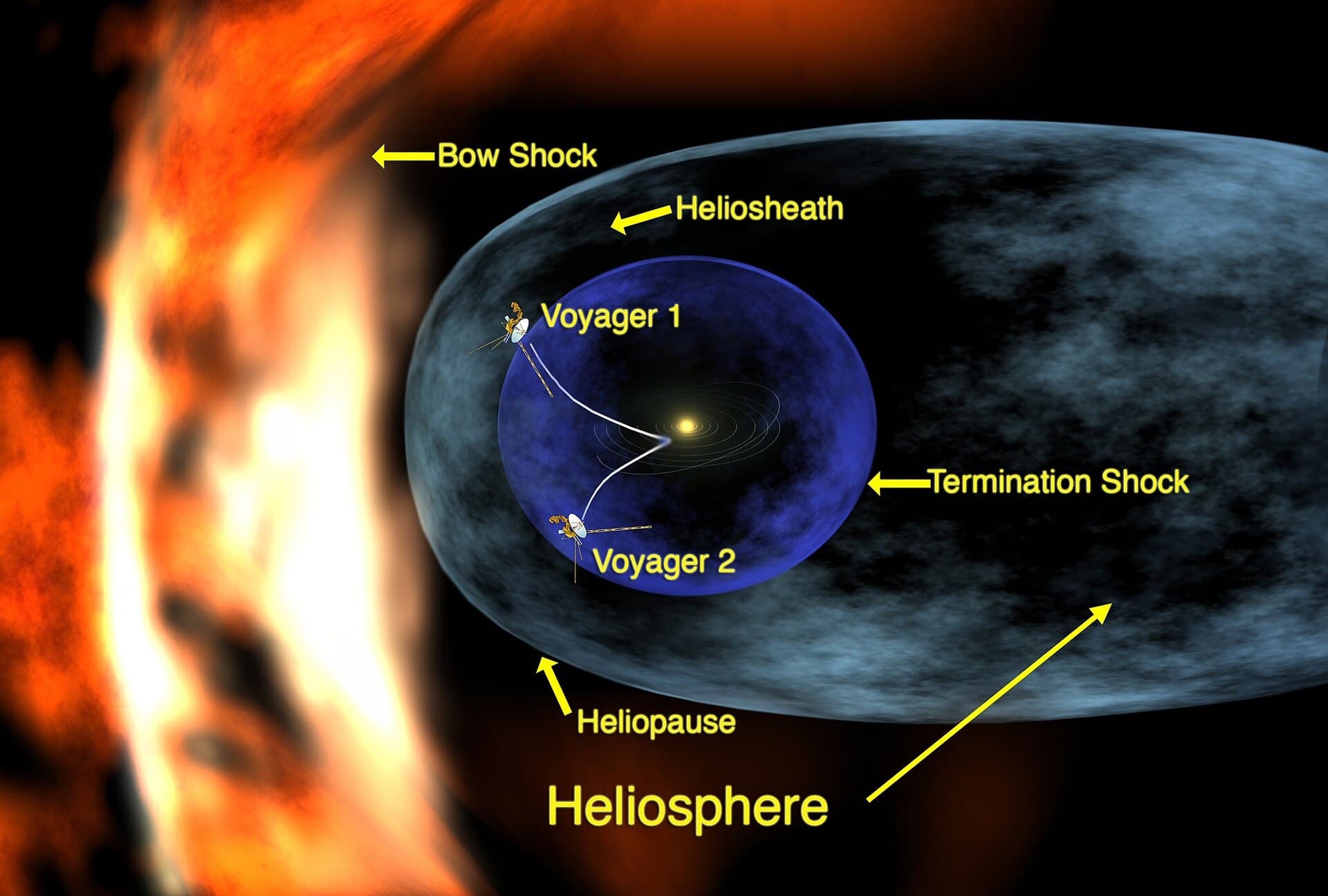
NASA's Voyager 1 spacecraft has hit a significant celestial milestone, reaching a distance of one light-day from its home planet. This achievement places the robotic explorer approximately 25.9 billion kilometers—or about 16.1 billion miles—away from Earth. By crossing this threshold, the probe confirms its status as the most distant human-made object currently in existence, having traveled further into the cosmos than any other piece of technology in history.
Understanding the Scale of a Light-Day
In astronomical terms, a light-day is defined as the distance light travels through a vacuum over the course of 24 hours. Because light moves at a velocity of roughly 300,000 kilometers per second, the distance covered in a single day is immense. This measurement is distinct from time; it serves as a unit of distance analogous to a light-year, utilized by scientists to better comprehend the vastness of the interstellar medium. The sheer scale of this distance means that any radio signal sent from ground stations on Earth requires a full day to reach the spacecraft's current position, with a corresponding return signal taking another 24 hours to traverse the gap.
The Trajectory of a Historic Mission
Launched on September 5, 1977, from Cape Canaveral, Florida, the primary objective for Voyager 1 was to conduct a comprehensive study of Jupiter and Saturn. The mission utilized a rare planetary alignment to perform gravity-assist maneuvers, allowing the craft to accelerate and redirect its trajectory toward the outer reaches of the solar system. The spacecraft successfully flew past Jupiter in 1979 and reached Saturn by late 1980, providing humanity with its first close-up imagery and data regarding those planets, their moons, and ring systems.
Entering Interstellar Space
Following its planetary survey, the probe continued its outward trajectory, eventually crossing the heliopause in August 2012. This boundary separates the heliosphere—a region dominated by the Sun's magnetic fields and particle output—from the interstellar medium. Upon crossing this threshold, Voyager 1 became the first human-built machine to operate outside the primary sphere of solar influence. It continues to transmit scientific and engineering telemetry back to NASA despite the extreme duration of its mission, which has now spanned nearly 50 years.
Interstellar Navigation and Future Prospects
The spacecraft is currently moving at a velocity of approximately 61,000 kilometers per hour. Its path is directed toward the constellation Ursa Minor. While it is broadly heading toward the vicinity of a star designated Gliese 445, it is not on a collision course; projections indicate the probe will pass within roughly 1.7 light-years of that star in about 40,000 years. Meanwhile, its counterpart, Voyager 2, which followed a different trajectory to explore Uranus and Neptune, remains roughly 3.2 billion kilometers closer to Earth and is expected to hit the one-light-day mark in November 2035.
A Cultural Time Capsule
Beyond its scientific instrumentation, the probe serves as a silent messenger. It carries a 12-inch, gold-plated copper disk known as the Golden Record. This artifact contains a curated collection of sounds, music, images, and greetings in 55 languages. It was designed to represent the diversity of biological life and human culture to any potential extraterrestrial observers. As the craft ventures deeper into the vacuum between stars, the record remains the most remote time capsule of human civilization ever created.
- The one-light-day milestone signifies a distance of 25.9 billion kilometers.
- Voyager 1 has been in operation for nearly five decades since its 1977 launch.
- The spacecraft continues to transmit data from the interstellar medium while carrying a Golden Record of human culture.
Spotted an error? · Our editorial policy
UP NEXTBritish Columbia Premier Lorne Doerkson Inducts Punjabi-Origin MLAs into CabinetSwipe more stories · TechnologyQuick cards, a few lines each. Tap to open.More from Technology

Anthropic Researcher Claims AI-Assisted Proof for the Riemann Hypothesis

Grand Theft Auto VI Becomes Largest Entertainment Launch in History

Trump Backs Jensen Huang’s Return to Nvidia Amid Board Resistance and Intelligence Scrutiny