US Airspace Grounded Nationwide Following Telecommunications and Radar Disruption
A telecommunications upgrade involving copper wire replacements triggered a rolling outage that affected regional air traffic control centers and grounded flights across the United States.

- A telecommunications upgrade involving copper wire replacement triggered a nationwide flight stoppage lasting more than four hours on Friday.
- Transportation Secretary Sean Duffy stated that a router flooded the air traffic control system with over 1,000 connection requests every 4 to 5 seconds.
- FAA Administrator Bryan Bedford confirmed that intermittent frequency instability affected up to 17 of the 22 regional air traffic control centers across the United States.
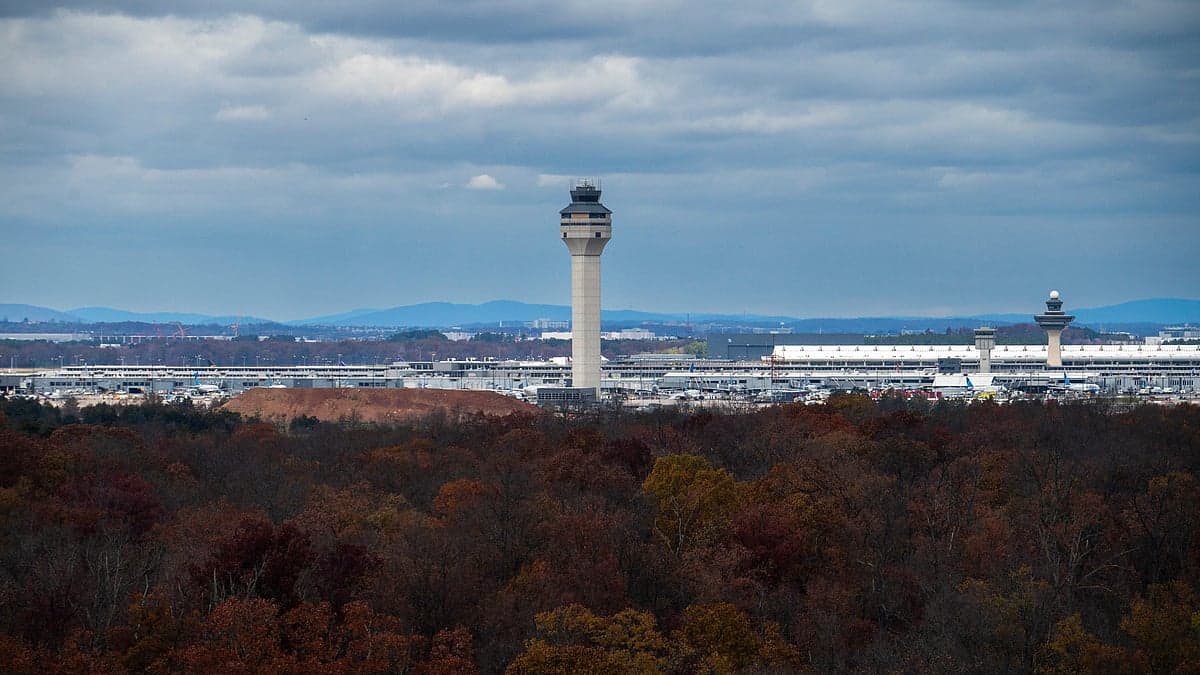
A telecommunications network upgrade in the United States caused the longest nationwide flight stoppage in 25 years, stranding passengers and disrupting travel schedules across the country beginning Friday. Federal authorities stated that airlines forced to divert flights were anticipated to resume normal operations by late Sunday. The Trump administration attributed the nationwide ground stop to a botched attempt at replacing aging copper wire communication lines with newer fiber-optic cabling.
Network Overload and Rolling Outages
Transportation Secretary Sean Duffy explained during a briefing that a contractor working for L3Harris Technologies Inc at a remote location flooded the air traffic control system with connection requests after installing a router. According to Duffy, the system experienced over 1,000 connection attempts every four to five seconds. This surge caused intermittent communication gaps with aircraft and disrupted radar feeds, prompting authorities to shut down the airspace for safety reasons.
Federal Aviation Administration Administrator Bryan Bedford reported that intermittent frequency instability impacted as many as 17 of the 22 regional air traffic control centers in the United States. Michael McCormick, a former airspace manager with the FAA, described the technical malfunction as a rolling outage, noting that such failures can unpredictably affect air traffic control centers at different times without prior warning.
How Regional Air Control Functions
The United States operates 22 regional air traffic control centers managed by the FAA to oversee long-distance aircraft operating between departure and arrival airports, typically handling flights at altitudes exceeding 10,000 feet. Flight navigation involves multiple layers, starting with airport control towers during takeoffs and landings across more than 500 equipped airports, followed by Terminal Radar Approach Control facilities as aircraft climb further away.
Regional centers depend on remote radio transmitter and receiver sites linked via telecommunications systems to maintain two-way communication with pilots and ensure aircraft maintain safe separation distances. While the government has been transitioning away from discontinued copper wires using a $12.5 billion Congressional funding allocation approved last year, the modernization effort remains incomplete.
Safety Protocols and Prior Precedents
Aviation experts consulted by reporters noted that aircraft airborne at the time of the order landed safely using standard emergency procedures. MIT aeronautics professor R. John Hansman pointed out that the incident was uniquely non-local because the failure originated within the core communication system and propagated across multiple regions.
Historically, the United States has ordered a complete nationwide flight halt only once before, following the September 11, 2001 terrorist attacks. Officials noted that Friday's wide-scale disruption differed from an isolated September incident at Newark Liberty International Airport, where railway construction workers accidentally damaged a backup fiber-optic cable and temporarily severed local radar communications.
- The disruption affected 17 of the 22 regional air traffic control centers managed by the FAA.
- Airborne aircraft landed safely following established emergency procedures during the halt.
- Federal authorities predicted a complete operational recovery for affected airlines by late Sunday.
Spotted an error? · Our editorial policy
UP NEXTSarfaraz Khan Details Emotional Toll of Dressing-Room Leak Allegations and Gambhir’s SupportSwipe more stories · TechnologyQuick cards, a few lines each. Tap to open.More from Technology

Anthropic Researcher Claims AI-Assisted Proof for the Riemann Hypothesis

Grand Theft Auto VI Becomes Largest Entertainment Launch in History

Trump Backs Jensen Huang’s Return to Nvidia Amid Board Resistance and Intelligence Scrutiny