Anthropic Researcher Claims Proof of Riemann Hypothesis Using AI Tool Claude
An artificial intelligence researcher at Anthropic has published a claim that he used the company’s Claude model to develop a proof for the 165-year-old Riemann Hypothesis.

- Anthropic technical staff member Levent Alpoge claims to have proved the Riemann Hypothesis using AI tool Claude.
- The Riemann Hypothesis, formulated in 1859, is one of the Clay Mathematics Institute's Millennium Prize Problems with a $1 million reward.
- The proof was released in 17 million lines of Lean code alongside a four-page explanation.
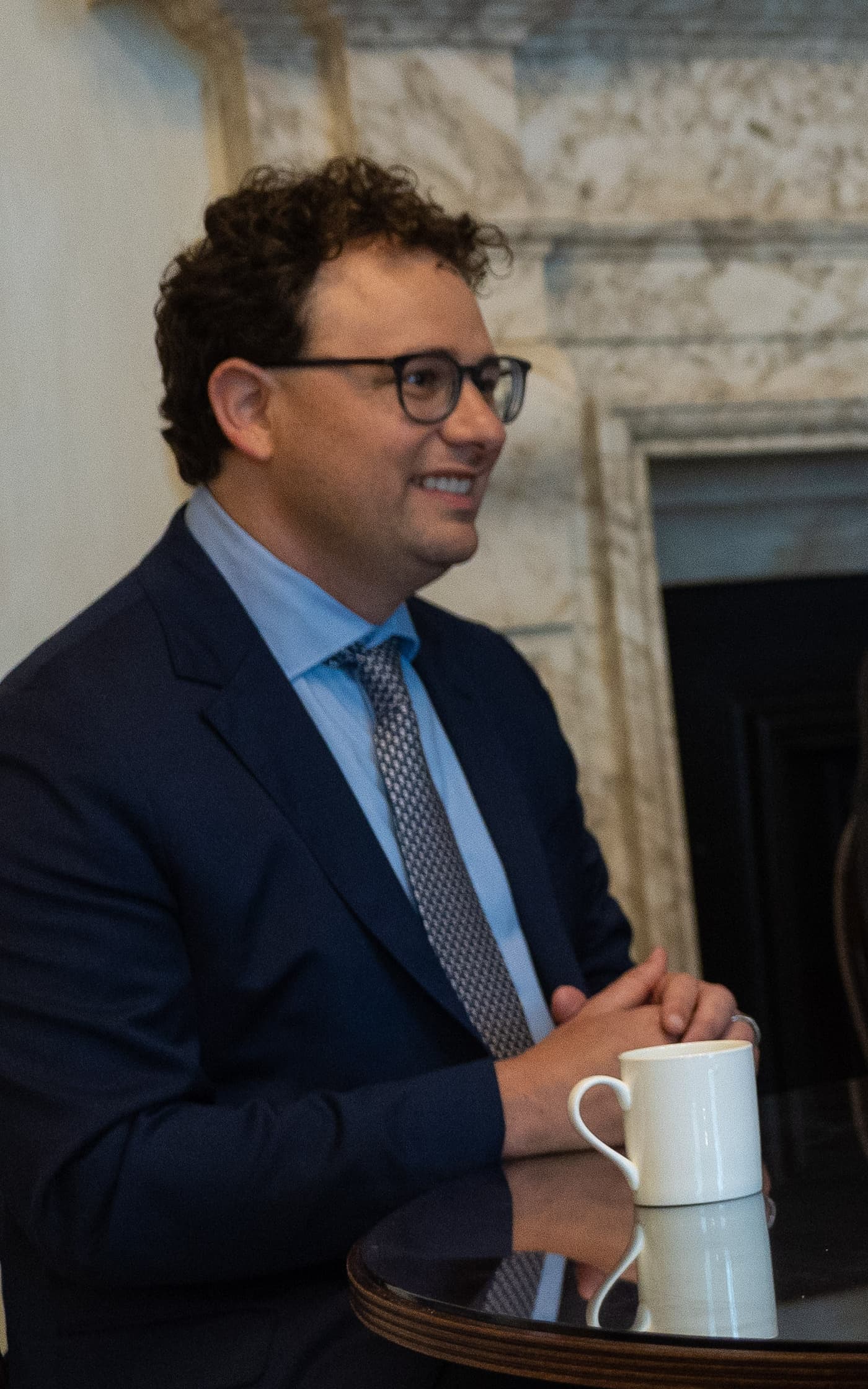
Levent Alpoge, a member of Anthropic's technical staff and a mathematician, announced on his website that he believes he has found a proof for the Riemann Hypothesis by working with the company's AI tool, Claude. Formulated in 1859, the Riemann Hypothesis addresses the distribution of prime numbers toward infinity and was designated as one of the Clay Mathematics Institute's Millennium Prize Problems in 2000, carrying a $1 million reward.
Alpoge released his findings in a four-page explanation alongside 17 million lines of Lean code, noting that the AI model helped him reach the solution late Sunday night. He subsequently messaged Anthropic CEO Dario Amodei regarding the announcement timing, coinciding with the San Francisco-based artificial intelligence company's initial public offering on Wall Street, which raised a record-breaking $81 billion at a $1.5 trillion valuation.
Verification and Academic Response
Martin Bridson, president of the Clay Mathematics Institute, stated that the verification process for such a claim takes time and that the problem remained listed as unsolved on the institute's website hours after the announcement. Bridson described the announcement as having historic significance while noting that achieving true understanding will be a long and difficult journey. Alpoge acknowledged that he is presenting a complete argument without having fully mastered the surrounding mathematics, noting that his work with the AI generated more than 250,000 pages.
Alex Kontorovich, distinguished professor and department chair of mathematics at Rutgers University, explained that Claude checked the Lean code and verified the proof as correct, though human mathematicians must still perform the work to fully understand it. The development follows a similar announcement in September where OpenAI stated its technology contributed to a breakthrough regarding the Navier-Stokes fluid flow equation. Anthropic did not respond to requests for comment regarding Alpoge's claim.
- Levent Alpoge announced a proof for the Riemann Hypothesis developed with Anthropic's Claude.
- The proof spans 17 million lines of Lean code and a four-page explanation.
- The Clay Mathematics Institute noted that verifying the claim will take time and the problem remains officially unsolved.
- Levent Alpoge, a member of Anthropic's technical staff and a mathematician, announced on his website that he believes he has found a proof for the Riemann Hypothesis by working with the company's AI tool, Claude.
Spotted an error? · Our editorial policy
UP NEXTFIDE World Chess Championship: Chess Legends Offer Diverging Predictions for Gukesh-Sindarov MatchOther angles · #Anthropic
Timeline →- NewsAnthropic Researcher Claims AI-Assisted Proof for the Riemann Hypothesis
- NewsAnthropic Shares Pull Back Toward IPO Price Following Record Nasdaq Debut
- NewsAnthropic Stock Falls 10% Following Record-Breaking Nasdaq Debut
- NewsAnthropic Secures Record-Breaking $81.3 Billion IPO and $1.8 Trillion Valuation
More from Technology

India and Singapore Conduct Defence Technology Talks in Kochi

Anthropic Researcher Claims AI-Assisted Proof for the Riemann Hypothesis

Grand Theft Auto VI Becomes Largest Entertainment Launch in History