NASA’s Voyager 1 Nears Historic One Light-Day Distance Milestone in Interstellar Space
NASA’s Voyager 1 spacecraft is approaching a historic milestone, becoming the first human-made object to travel a distance of one light-day from Earth.

- Voyager 1 is set to become the first human-made object to travel one light-day from Earth on November 18.
- A light-day represents roughly 16 billion miles, which light covers in 24 hours.
- The spacecraft was launched in 1977 and entered interstellar space in 2012.
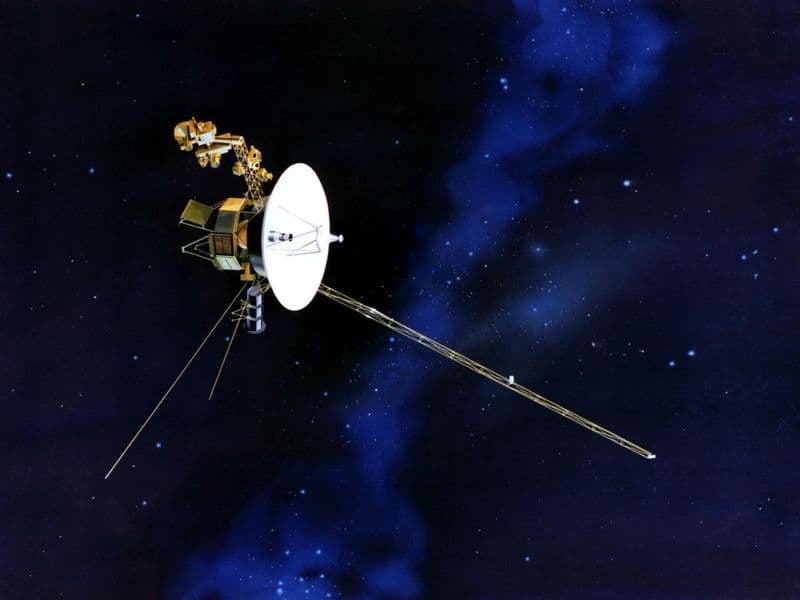
NASA's Voyager 1 spacecraft is on course to reach an unprecedented distance milestone. Nearly five decades after its initial launch, the robotic probe is projected to become the first human-made object to travel one light-day away from Earth.
Understanding the One Light-Day Milestone
A light-day measures the total distance that light travels over a 24-hour period. Because light moves at approximately 186,000 miles per second, a single light-day equates to roughly 16 billion miles or 26 billion kilometres.
Timeline and Schedule
According to updates from NASA, the robotic explorer is expected to cross this massive threshold on Wednesday, November 18, at 5:16:07 am EST, which corresponds to 3:46:07 pm IST. Achieving this feat will have taken the spacecraft 49 years, two months, and 11 days.
Journey Through Interstellar Space
Having departed the solar system years ago, Voyager 1 currently travels through interstellar space. NASA notes that the probe entered interstellar space back in 2012 and has continued transmitting telemetry and scientific information back home ever since.
Current Speed and Perspective
The spacecraft moves at a continuous velocity of nearly 38,000 miles per hour, equivalent to 61,000 kilometres per hour. To put this immense distance in context, sunlight takes roughly eight minutes and 20 seconds to cover the 93 million miles between the Sun and Earth.
Comparison Within the Solar System
Furthermore, light takes approximately four hours and ten minutes to travel between Earth and Neptune, recognized as the most distant planet in our solar system. The vast gap highlights the extreme scale of deep space exploration.
Voyager 2 Trajectory
The mission's twin probe, Voyager 2, also launched in 1977 but took a different route through the solar system to observe Uranus and Neptune. NASA projects that Voyager 2 will reach the same one-light-day threshold in November 2035.
Future Stellar Direction
NASA reports that Voyager 1 is currently journeying in the general direction of a star named AC +79 3888, also known as Gliese 445. Situated in the constellation Ursa Minor, this star lies more than 17 light-years away from Earth.
Long-Term Projection
Projections indicate that the historic spacecraft will eventually pass within approximately 1.7 light-years of Gliese 445. This close approach is expected to take place in around 40,000 years.
Mission Longevity
The upcoming distance milestone highlights the remarkable durability and enduring reach of the Voyager program. Nearly 50 years after launch, the initiative continues to push the boundaries of human exploration further than any prior endeavor.
- Voyager 1 will reach the one light-day landmark on November 18 after 49 years, two months, and 11 days of travel.
- The probe is currently traveling through interstellar space at nearly 38,000 miles per hour.
- Twin spacecraft Voyager 2 is projected to reach the same distance milestone in November 2035.
Spotted an error? · Our editorial policy
UP NEXTDadasaheb Phalke International Film Festival Awards 2026: Taylor Swift and James Cameron Among WinnersSwipe more stories · ScienceQuick cards, a few lines each. Tap to open.