Rahul Gandhi Alleges at Bharat Summit That India Is No Longer a Democracy
Congress leader Rahul Gandhi asserted at the Bharat Summit in Hyderabad that India has ceased to function as a democracy, pointing to changes in elections since 2014 and controversies over foreign delegates.

- Rahul Gandhi stated at the Bharat Summit that India is no longer a democracy.
- He claimed the opposition remained in shock for a decade following the 2014 elections.
- Shashi Tharoor stated that numerous approved foreign speakers were denied entry into India.
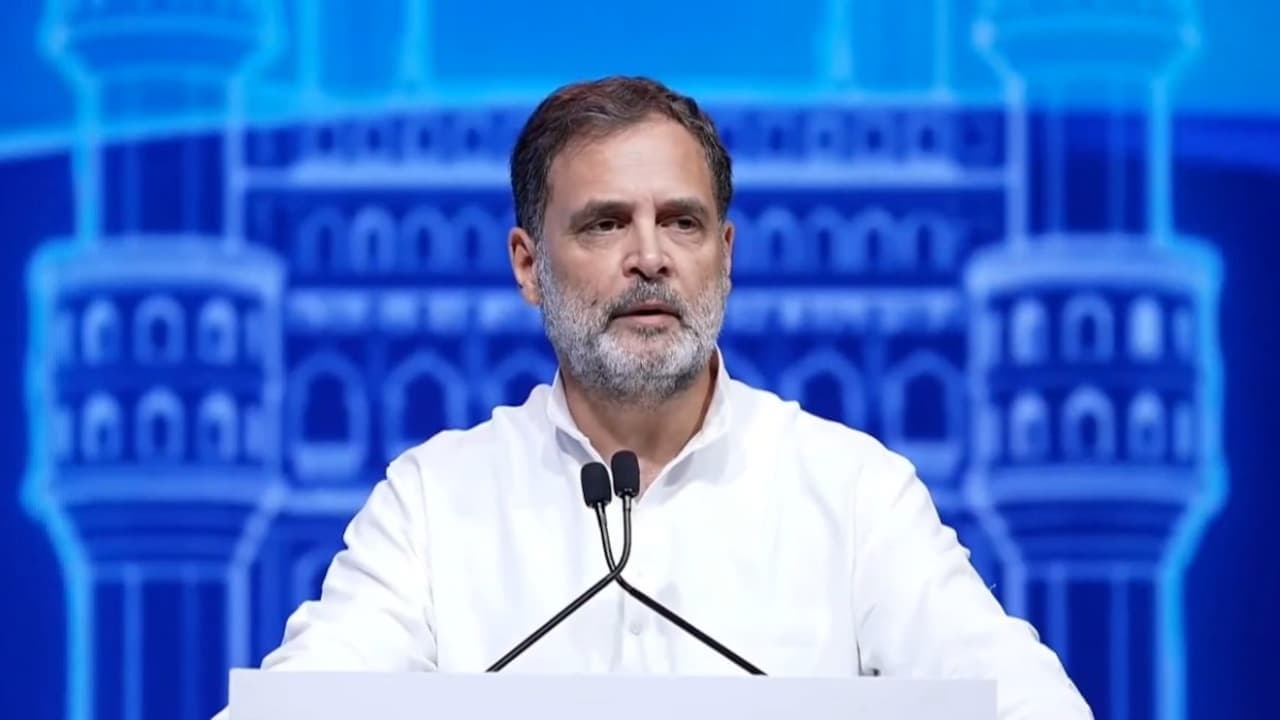
Congress leader Rahul Gandhi delivered a critical address on Saturday during the Bharat Summit in Hyderabad. He asserted before an audience of international and domestic participants that India has ceased to operate as a functioning democracy. The gathering, supported by the Telangana government, brought together thinkers, policymakers, and political figures from around the world.
Allegations Regarding the Electoral System
According to the Congress politician, the democratic framework of the country suffered a critical breakdown in 2014. He stated that the political opposition remained in a state of shock for nearly a decade following that year's general elections. Gandhi contended that the electoral landscape transformed entirely, shifting away from close contests and coalition governments toward an unfamiliar dynamic.
He elaborated that the 2014 general elections involved unprecedented financial investments and a novel campaign style. Millions of dollars were injected into the political system, creating a campaign structure unlike any previous political drama witnessed in the nation. The opposition struggled initially to comprehend the rapid shift in the country's political behavior.
Examining State Election Anomalies
The opposition party subsequently undertook a review of voting outcomes across multiple states to investigate the observed shifts. Gandhi highlighted Maharashtra as an example, noting that opposition vote shares remained nearly identical between national and state contests despite drastically different final outcomes. He alleged that seven million new voters appeared on electoral rolls within a three-month window between elections, claiming every single one supported the ruling party.
Further questioning electoral legitimacy, Gandhi raised concerns regarding administrative decisions concerning voter rolls. He asked how an electoral process could remain legitimate when the Election Commission reportedly designated 140 million voters as illegal. The speaker maintained that systematic investigations by his party yielded concrete evidence supporting these assertions.
Characterizing Political Opponents
During his remarks, Gandhi launched a sharp verbal attack against the ruling establishment, characterizing certain political figures as fascists. He drew a psychological distinction between individuals who assume they possess answers to every question and those who maintain curiosity and listen to alternative viewpoints. He argued that figures in the former category typically dominate discussions through shouting.
The speaker suggested that authoritarian personalities emerge when institutional systems experience structural collapses, creating public disruptions before eventually fading away. He framed the contemporary political environment as a struggle between humble citizens who pay attention to diverse perspectives and those who dominate public discourse with rigid certainty.
Addressing international attendees, Gandhi offered an apology to foreign delegates who were scheduled to participate in the summit but failed to reach the venue. He claimed that the Union Government prevented international guests from entering the country, stating that the situation reflects current administrative challenges within India.
Visa Controversies and Official Responses
The remarks followed a public dispute regarding international speakers who faced travel restrictions ahead of the event. Congress parliamentarian Shashi Tharoor stated on Friday that 115 speakers approved by the Ministry of External Affairs faced entry denials or visa cancellations allegedly ordered by the Ministry of Home Affairs. Tharoor questioned the legality of blocking critical voices.
In response to the growing controversy, Ministry of External Affairs spokesperson Randhir Jaiswal addressed reporters regarding the travel restrictions. He maintained that handling visa authorizations remains an inherent sovereign function belonging to national governments. The two-day conference proceeded despite the tensions surrounding foreign delegations.
- Rahul Gandhi criticized the ruling party at the Bharat Summit in Hyderabad.
- He pointed to election campaign changes and voter roll shifts since 2014.
- Foreign delegates reportedly faced visa cancellations prior to the conference.
Spotted an error? · Our editorial policy
UP NEXTCelebrities and Cricketers Gather in Chennai for Anirudh Ravichander and Kavya Maran’s Wedding ReceptionOther angles · #Bharat Summit
Timeline →- NewsItalian Legislators Criticize European Socialist Leader for Remarks on India’s Democracy
- NewsItalian Politician’s Remarks at Hyderabad Summit Spark Political Controversy
- NewsTelangana BJP Seeks Legal Action Against Italian Politician Over Summit Remarks
- NewsTelangana BJP Challenges Italian Politician’s Participation in Bharat Summit
More from Indian Politics
BJP MP Nishikant Dubey Alleges Sonia Gandhi Held Major Stake in Early Maruti Venture
Arunachal Organisations Appeal to Amit Shah to Cancel 11,200-MW Siang Mega Dam

Former Kerala Sports Minister Named as Accused in Lionel Messi Event Probe