Supreme Court Upholds Maharashtra’s Rotation Policy for Local Body Reservations
The Supreme Court has dismissed a challenge to Maharashtra’s new rules for rotating reserved seats in Zila Parishads and Panchayat Samitis, confirming the state’s authority to reset the cycle.

- The Supreme Court upheld Maharashtra's 2025 rules for rotating SC/ST seats in local bodies.
- The court ruled that candidates have no vested right to specific reserved constituencies.
- The policy was challenged as arbitrary, but the court found it within the state's legal authority.
The Supreme Court of India has formally rejected a legal challenge against the Maharashtra government’s rotation policy concerning seats reserved for Scheduled Castes (SC) and Scheduled Tribes (ST) in local governing bodies. A bench led by Justices Joymalya Bagchi and V. Mohana dismissed an appeal that sought to invalidate a provision treating elections held after the 2025 rule enforcement as the inaugural cycle for seat rotation.
Legal Background of the Challenge
The petitioner, Sau. Rupali Indrabhushan Sonde, had initially contested the September 19, 2025, decision by the Nagpur bench of the Bombay High Court. The core of the grievance focused on Rule XII of the Maharashtra Zilla Parishads and Panchayat Samitis (Manner and Rotation of Reservation of Seats) Rules, 2025. Critics of this regulation argued that by declaring post-2025 general elections as the first for rotation purposes, the state was effectively erasing historical data. Legal representatives for the petitioner suggested that this reset unfairly disrupted the established sequence, thereby hindering candidates who anticipated reserved status based on previous cycles.
In the original proceedings, the Bombay High Court had examined whether the rule was arbitrary or unconstitutional under Article 14. The state government defended its position by citing the necessity of the 1961 Act’s provisions, noting that recent delimitation exercises had fundamentally altered the geographical and demographic composition of electoral divisions. Because these boundaries were being redefined, the government argued that a fresh rotation cycle was both practical and legally permissible.
Court’s Rationale and Future Implications
In its recent ruling, the Supreme Court affirmed that individual voters or prospective candidates do not possess a vested right to demand that a specific constituency remain reserved. The justices emphasized that the implementation of rotation is a policy-based decision resting with the state, provided the process remains within statutory boundaries. The court noted that the primary objective of rotation is to ensure that reservation benefits are distributed equitably across various constituencies over time, rather than creating permanent entitlements for specific areas.
While the court maintained that the current policy is neither illegal nor arbitrary, it did offer a procedural path forward for the petitioners. The bench acknowledged submissions from senior counsel representing the appellant and granted permission to submit a formal representation to the Maharashtra government, requesting a reconsideration of the current reservation rules. Despite this, the immediate legal barrier to the upcoming local elections has been removed. With the appeal dismissed, the State Election Commission is now positioned to proceed with the elections for Zila Parishads and Panchayat Samitis under the newly established rotation framework.
- Maharashtra's Zila Parishad and Panchayat Samiti elections will proceed under the updated rotation rules.
- The court clarified that the purpose of rotation is broader distribution of benefits, not fixed local entitlement.
- The state government successfully argued that delimitation necessitated a fresh approach to reservation.
- The Supreme Court of India has formally rejected a legal challenge against the Maharashtra government’s rotation policy concerning seats reserved for Scheduled Castes (SC) and Scheduled Tribes (ST) in local governing bodies.
Spotted an error? · Our editorial policy
UP NEXTPrime Minister Narendra Modi Visits IIT Kharagpur for Platinum Jubilee CelebrationsSwipe more stories · Indian PoliticsQuick cards, a few lines each. Tap to open.More from Indian Politics
Arunachal Organisations Appeal to Amit Shah to Cancel 11,200-MW Siang Mega Dam

Former Kerala Sports Minister Named as Accused in Lionel Messi Event Probe
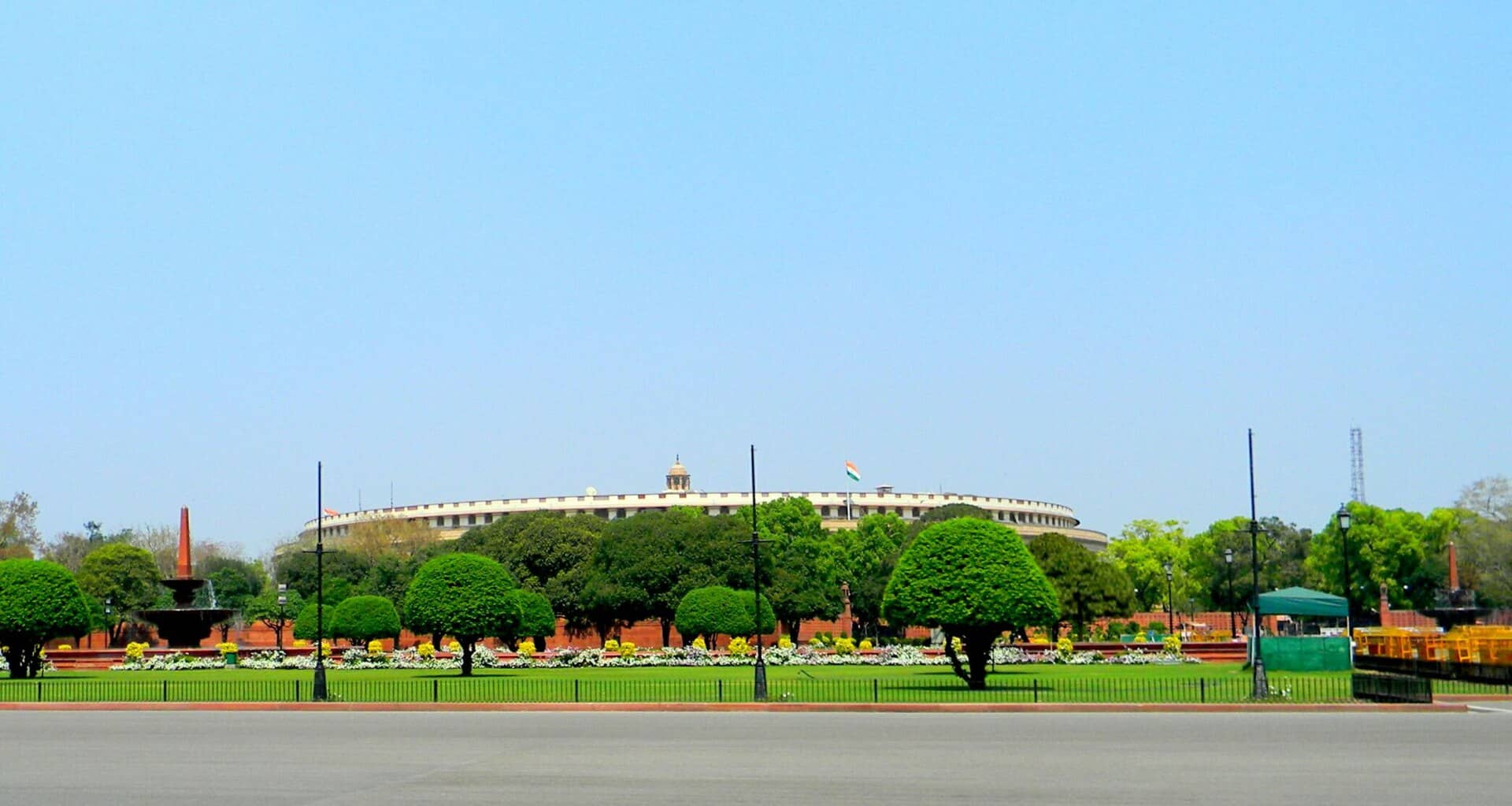
Parliament’s Monsoon Session Sets Record at 100 Days Unprorogued Amid Delimitation and Reservation Speculation