Constituent Assembly’s 1949 Debate on Lok Sabha Seat Caps Resfaces Amid New Expansion Bill
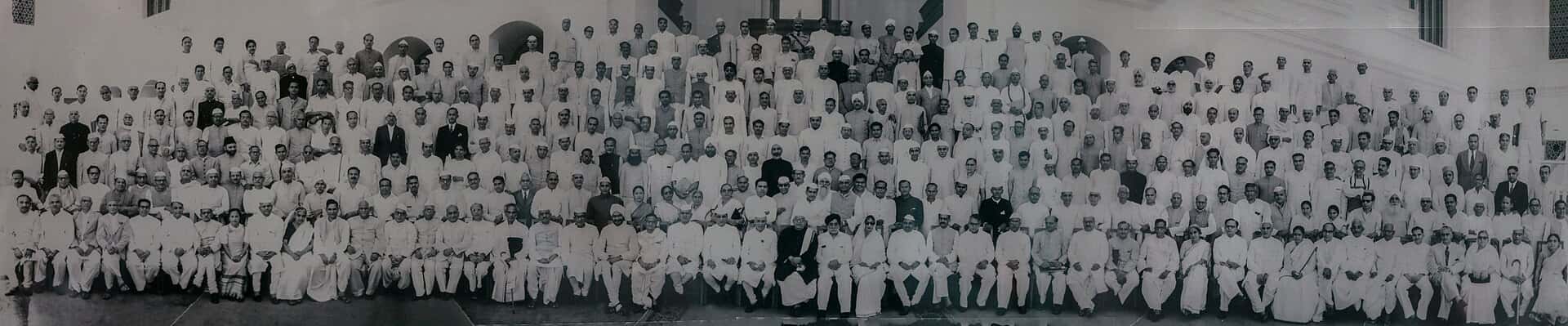
As Parliament prepares to debate a constitutional amendment expanding the Lok Sabha to 850 seats, historical records highlight a 1949 Constituent Assembly debate where a proposal to remove member ceilings was rejected.

- The Constituent Assembly debated a seat cap for the Lower House on January 4, 1949, eventually adopting a maximum limit of 500 members.
- KT Shah moved an amendment to remove the ceiling in favor of population-based scaling, which the assembly negatived.
- M Ananthasayanam Ayyangar defended the 500-seat limit, arguing that a larger body would hinder effective representation.
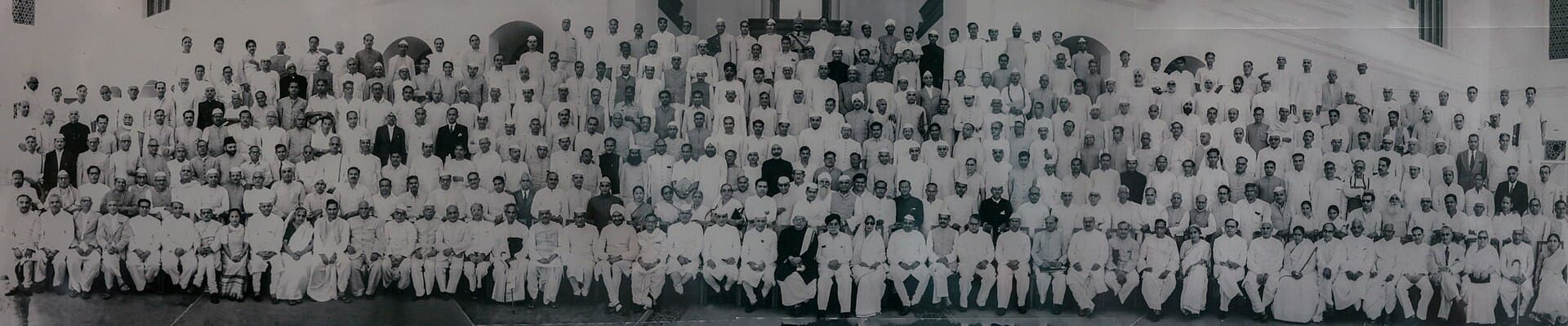
Current legislative proposals aiming to increase the strength of India's Lower House have drawn renewed attention to historical discussions held during the drafting of the national constitution. In January 1949, the Constituent Assembly engaged in a detailed deliberation regarding whether a permanent numerical ceiling should be established for representatives in the chamber. The final text adopted during those formative sessions capped the maximum number of directly elected lawmakers at five hundred, a foundational limit that was later codified under Article 81(1)(a) when the Constitution was formally adopted on November 26, 1949.
Divergent Views Among Assembly Members
During the 1949 proceedings, economist and socialist KT Shah put forward a formal amendment seeking to eliminate the proposed ceiling on seats. Shah argued that fixing an absolute maximum ran contrary to democratic principles of popular representation, suggesting instead that the size of the chamber should scale alongside population growth to prevent each lawmaker from representing an increasingly diluted constituency over time. Countering this perspective, Congress member M Ananthasayanam Ayyangar maintained that a limit of five hundred members was adequate for effective governance. Ayyangar noted that maintaining quorum was already a recurring challenge with smaller member counts, contending that expanding the assembly excessively would diminish legislative efficiency rather than enhance it.
Upcoming Parliamentary Developments and Seat Revisions
The historical deliberations return to prominence as the central government plans to introduce the Constitution (132nd Amendment) Bill, 2026, which proposes raising the Lok Sabha's maximum capacity to 850 seats alongside a one-third reservation for women. Under the upcoming legislative framework, the maximum number of state representatives could reach 815, while Union territory representation could climb to 35, alongside an increase in state assembly ceilings from 500 to 650 seats. To accommodate these sweeping modifications and freeze the resulting constituency boundaries until 2051, a special parliamentary session has been scheduled, with the Lok Sabha convening on November 30 and the Rajya Sabha meeting on December 2 before proceedings conclude on December 3.
- Constituent Assembly members debated capping Lok Sabha seats at 500 in January 1949.
- An amendment by KT Shah to discard the ceiling was rejected by the assembly.
- The upcoming 132nd Amendment Bill seeks to expand the Lok Sabha limit to 850 members.
- A special parliamentary sitting is scheduled between November 30 and December 3.
Spotted an error? · Our editorial policy
UP NEXTDonald Trump Says SEC Will Require ‘Super Intelligence’ Terminology for AISwipe more stories · Indian PoliticsQuick cards, a few lines each. Tap to open.More from Indian Politics
RSS Chief Mohan Bhagwat Calls for National Unity at ‘Rashtra Vandanam’ Event
Sonia Gandhi Cancels Mumbai Trip While Congress Pursues Delimitation Talks with Sharad Pawar
Abhijeet Dipke criticizes Centre’s Delimitation Bill over rising taxpayer costs ahead of Parliament session