Bengaluru Metro Funding Dispute Erupts Ahead of Pink Line Launch
A political clash has emerged in Bengaluru over the funding pattern of the city’s metro network, with a senior parliamentarian challenging state ministers’ claims regarding central and local financial contributions.

- State ministers claimed Karnataka bears 84 percent of the Bengaluru Metro cost while the Centre contributes 16 percent.
- MP Tejasvi Surya disputed this, stating the Centre pays 54 percent and Karnataka pays 46 percent.
- The dispute involves nearly Rs 29,000 crore in foreign loans backed by central sovereign guarantees.
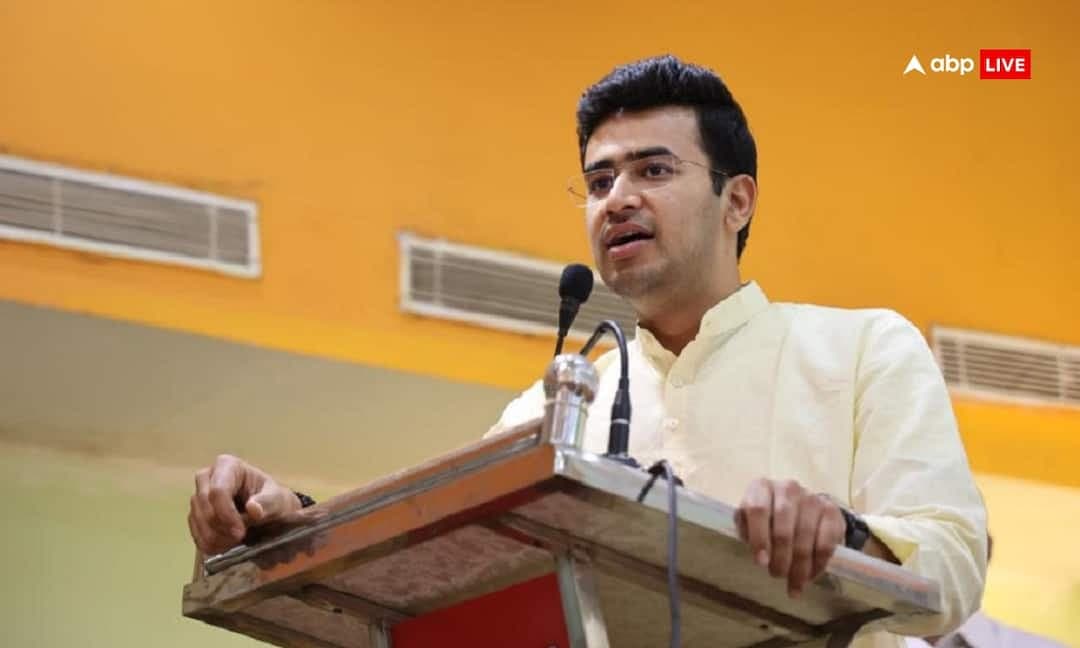
A sharp political dispute has broken out in Bengaluru regarding the funding structure of the city's metro infrastructure projects. The clash unfolded ahead of the scheduled inauguration of the Pink Line's elevated section by Prime Minister Narendra Modi. The confrontation centers on conflicting figures presented by local state ministers and a prominent parliamentarian concerning how much financial responsibility is held by the central government versus the state administration.
Dispute Over Financial Contributions
Greater Bengaluru Development Minister Krishna Byre Gowda previously stated that out of a combined project outlay of Rs 77,891 crore, the state government was bearing approximately 84 percent, amounting to Rs 65,291 crore. According to the state's calculations, the central government's contribution stood at roughly 16 percent, or Rs 12,600 crore, leading the minister to assert that the state was spending nearly five rupees for every single rupee provided by the Centre. The state administration also indicated plans to formally appeal to the Prime Minister during his visit for a greater central contribution and time-bound project approvals.
However, countering these assertions during a press conference, Bengaluru South MP Tejasvi Surya accused the state government of misrepresenting the funding pattern and misleading the public. Surya claimed that the actual financial breakdown placed the Centre's share at approximately 54 percent and the state's share at 46 percent. He maintained that ordinary taxpayers ultimately finance the initiatives through their tax contributions.
Breakdown of Loans and Equity
Explaining the underlying metrics, Surya pointed out that the Bangalore Metro Rail Corporation Limited functions as a 50:50 joint venture between the central and state governments, with both entities contributing identical equity amounts of Rs 9,164 crore. He alleged that the state administration improperly factored nearly Rs 29,000 crore in foreign loans—which carry central sovereign backing and are routed through and serviced by the corporation—into the state's own direct contribution.
According to Surya, separating these Centre-guaranteed foreign loans from the calculation reveals that the direct state budget share settles near 46.65 percent, while the central portion is calculated at 53.35 percent. He emphasized that the corporation and the state government operate as distinct entities and criticized efforts to confuse the two structures.
Project Timelines and Delays
The sparring also touched on project execution timelines and delays across different metro corridors. Addressing the Pink Line, Surya noted that the project required 12 years to reach its current inauguration milestone since receiving approval from the Union Cabinet in January 2014. He highlighted that while a 7.5-kilometer elevated section was set for opening, the underground stretch remained uncompleted, attributing various delays to cancelled tenders and contracting setbacks during previous political tenures.
Additional concerns were raised regarding other transit corridors. Surya noted that the proposed Orange Line faced setbacks due to repeated design changes and alignment alterations. Regarding Phase 3A, he stated that an independent review requested by the Centre led to a reduction in the initial proposal from Rs 28,405 crore down to Rs 25,999 crore, generating notable cost savings.
Corridor Alignment and Planning Concerns
The exchange also involved debate over broader infrastructure plans intersecting with the transit network. Surya alleged that a proposed Veterinary College station was dropped from the revised Red Line alignment to accommodate alternative infrastructure proposals, such as a Hebbal short tunnel and an elevated corridor toward Mehkri Circle.
Citing observations from the Karnataka Finance Department regarding those alternative projects, Surya pointed out questions raised about the absence of comprehensive feasibility studies and whether the proposed measures would effectively resolve traffic congestion. Furthermore, he referenced a Comptroller and Auditor General report that flagged substantial additional expenditures stemming from land acquisition delays and cost estimate discrepancies during previous phases.
- The combined project outlay for the metro network stands at Rs 77,891 crore.
- Both the central and state governments contributed Rs 9,164 crore each as equity into the joint venture.
- Discussions and reviews have affected the planning and cost estimates of upcoming metro phases, including the Red and Orange lines.
Spotted an error? · Our editorial policy
UP NEXTDadasaheb Phalke International Film Festival Awards 2026: Taylor Swift and James Cameron Among WinnersSwipe more stories · Indian PoliticsQuick cards, a few lines each. Tap to open.More from Indian Politics

Arunachal Organisations Appeal to Amit Shah to Cancel 11,200-MW Siang Mega Dam

Former Kerala Sports Minister Named as Accused in Lionel Messi Event Probe
Parliament’s Monsoon Session Sets Record at 100 Days Unprorogued Amid Delimitation and Reservation Speculation