Supreme Court Judge Advises Caution Over Delhi Air Quality in Custody Hearing
During a child custody dispute hearing, Supreme Court justices suggested a father wait for Delhi’s air quality to improve before hosting his son from Singapore.

- Supreme Court justices JB Pardiwala and KV Viswanathan advised a father against bringing his son from Singapore to Delhi due to poor air quality.
- The advice was given during a virtual hearing regarding a long-running child custody and visitation dispute.
- Delhi's AQI was measured at 214, classified as poor, during the time of the hearing.
A bench of the Supreme Court of India presided over a discussion regarding a long-standing matrimonial and child custody dispute on Wednesday, during which air quality concerns became a point of judicial commentary. Justices JB Pardiwala and KV Viswanathan interacted with the parties involved, including a young boy who participated in the legal session through a virtual connection from Singapore. The litigation centers on allegations from a father residing in Delhi that his estranged wife relocated their children to Singapore in direct violation of previously established visitation mandates.
Judicial Remarks on Environmental Conditions
As the legal proceedings unfolded, the conversation transitioned toward practical arrangements for visitation schedules. The father expressed a desire for his son to travel to the national capital during upcoming school breaks. In response to this proposal, Justice Pardiwala offered an informal recommendation that the parent prioritize the atmospheric conditions of the city before finalizing travel plans. Citing the significant disparity in environmental standards, the justice suggested that the father should allow time for the local Air Quality Index to stabilize, noting that the boy is accustomed to the cleaner environment of Singapore.
This light-hearted exchange drew additional input from Senior Advocate Siddharth Luthra, who represented one of the involved parties. During the discussion, the lawyer humorously suggested that the judiciary might also benefit from relocating to Singapore to escape the seasonal deterioration of air quality in the national capital region. Justice Pardiwala responded with a witty remark about such a prospect only being possible in a future life, an observation that prompted positive reactions within the courtroom.
Context of the Ongoing Custody Dispute
The court sought to establish a functional framework for the family to maintain connections despite the geographic distance and the ongoing conflict. Beyond the immediate interaction with the son, the bench inquired about the status of the boy’s older sibling, who is currently residing in London. The judges encouraged the parents to explore more feasible alternatives for interaction, such as the father making periodic trips to visit his children in their current locations. They further proposed that the daughter in London should be invited to spend time with her father for a duration of one week to help bridge the familial divide.
Broader Trends in Delhi Pollution Management
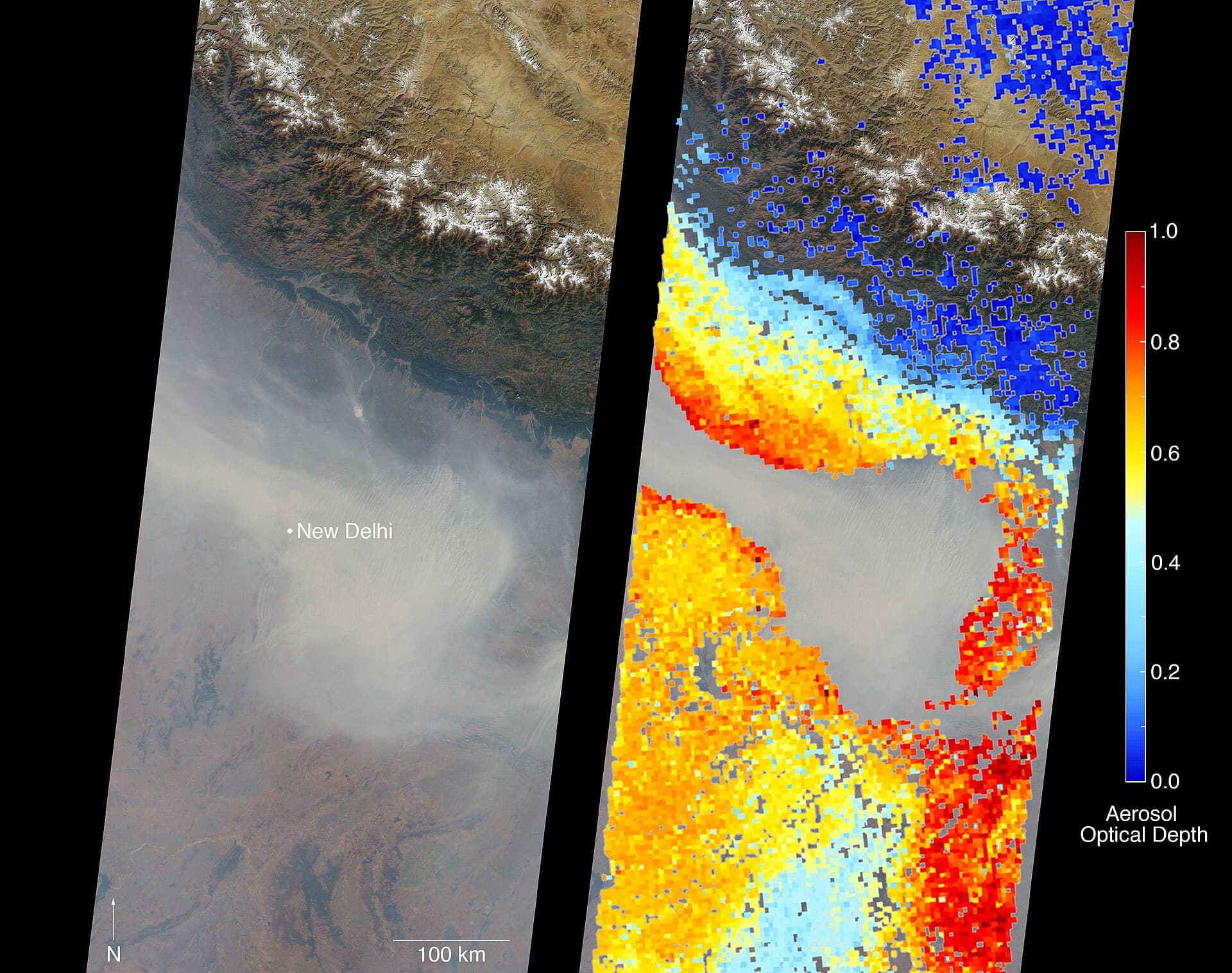
The remarks from the bench on Wednesday occur against the backdrop of sustained concern regarding the air quality in Delhi and its surrounding regions. Data from the Central Pollution Control Board recorded an AQI of 214 in the morning, which falls under the 'poor' category. Compounding these environmental challenges is a drop in temperatures, with the Safdarjung observatory recently noting a minimum of 11 degrees Celsius, marking the lowest temperature recorded for the season thus far.
The Supreme Court has taken an active stance on the issue of environmental degradation in recent weeks, frequently highlighting the need for collective action. Earlier in November, a bench led by Chief Justice of India Surya Kant emphasized that judicial orders and regulatory restrictions alone cannot effectively mitigate the crisis. The court has articulated that addressing pollution requires a fundamental shift in public behavior and increased awareness among the citizenry regarding the health risks posed by high emission levels. In these previous sessions, the judiciary identified vehicular emissions and widespread traffic congestion in areas including Noida and Gurugram as primary drivers of the poor air quality.
By advising the parent to consider the health implications of the current environmental climate, the court balanced its formal responsibilities in the custody case with broader public health concerns. The proceedings reflect a recurring theme in the current judicial term where the environmental reality of the national capital is frequently integrated into the discourse of everyday legal matters, emphasizing that the impact of pollution is a shared concern affecting all residents, including families navigating complex personal disputes.
- The Supreme Court has increasingly linked judicial proceedings to the broader public health crisis caused by Delhi's air pollution.
- The bench encouraged the parents to adopt more flexible visitation plans that involve the father traveling abroad instead of the children returning to Delhi.
- The judiciary maintains that systemic environmental improvements require public movement rather than just court-mandated restrictions.
Spotted an error? · Our editorial policy
UP NEXTIndia Takes Commanding 118-Run Lead Against New Zealand on Day 3 of First TestSwipe more stories · IndiaQuick cards, a few lines each. Tap to open.More from India
Prime Minister Narendra Modi Visits IIT Kharagpur for Platinum Jubilee Celebrations
Ladakh Holds First Local Body Elections Since 2019 Reorganization
YouTuber Remanded to Prison Following Re-enactment of Madurai Jewellery Heist