Tata Steel Targets 50 Million Tonne Domestic Capacity Expansion
Tata Steel plans to scale its Indian operations significantly over the next decade by dedicating the majority of its capital investment to domestic growth.

- Tata Steel plans to increase its annual production capacity in India to 50 million tonnes within the next ten years.
- Approximately 75% of the company's total annual capital expenditure is dedicated to domestic projects.
- The firm is currently evaluating Maharashtra for a potential 15 million tonne greenfield site.
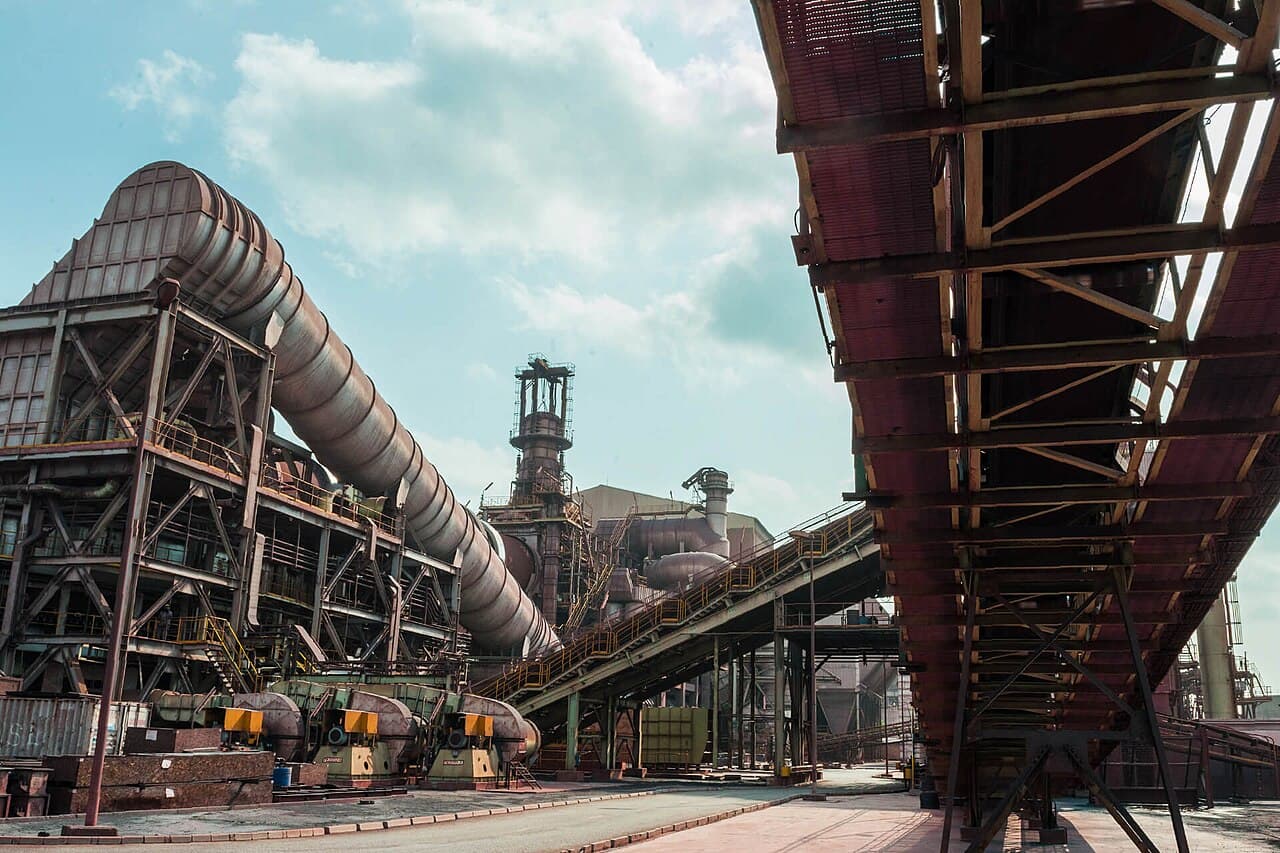
Photo: Zmmur / Wikimedia Commons (CC BY-SA 4.0)
Tata Steel aims to expand its annual steelmaking capacity within India to 50 million tonnes over the coming decade. Managing Director and CEO T.V. Narendran stated that the organization is actively planning for this long-term growth, leveraging existing sites while keeping options open for new infrastructure projects. Currently, the company operates with a capacity of approximately 27 million tonnes.
Strategic Capital Allocation and Growth Potential
The firm intends to direct roughly 75% of its annual capital expenditure toward its domestic operations, reflecting India's status as a primary growth market. While international demand, particularly in Europe, remains flat, the company is prioritizing its Indian footprint to meet rising consumption. Annual capital expenditure in the country typically ranges between Rs 15,000 crore and Rs 16,000 crore, with total yearly outlays for the group estimated between Rs 18,000 crore and Rs 20,000 crore. Maintaining financial health and strong cash flows remains a prerequisite for sustaining this trajectory.
Management is evaluating potential sites for a new 15 million tonne greenfield plant, with Maharashtra under consideration. Discussions with local authorities are ongoing, specifically regarding land procurement in areas such as Gadchiroli. However, the company is not tethered to a single location; existing facilities at Jamshedpur, Kalinganagar, Meramandali, and Neelachal Ispat Nigam provide diverse avenues for scaling production. Narendran noted that modern production flexibility allows the company to choose between various process routes and technologies, such as electric arc furnaces and recycling, rather than relying on one standardized model.
Enhancing Product Value and Operational Efficiency
Beyond raw capacity, Tata Steel is shifting its focus toward high-value, specialized products to reduce reliance on commodity price cycles. By expanding its downstream influence in sectors including wires, pipes, and tinplate, the firm seeks to strengthen its position in automotive, infrastructure, and oil and gas industries. The company currently commands over half of the market share for automotive steel in India, and its consumer-facing Tata Tiscon brand reports annual revenues near Rs 15,000 crore.
Profitability, even during downturns in global steel prices, remains the core operational objective. While the company is exploring green steel technologies, hydrogen-based production is currently considered a long-term goal. Economic viability for hydrogen-based methods would likely require input costs near USD 2 per kilogram, a threshold not yet met in the local market. For now, the focus remains on improving the carbon efficiency of legacy plants and monitoring customer willingness to pay premiums for environmentally sustainable products.
As of now, the company is not pursuing major inorganic growth via acquisitions, though it remains open to deals that provide strategic value in specialized product segments. The overarching vision is to construct a manufacturing base capable of supporting market requirements for the next 15 to 20 years.
- Tata Steel aims to reach a 50 million tonne annual capacity in India, up from the current 27 million tonnes.
- The company is pivoting toward specialized, higher-margin steel products to avoid the volatility of commodity markets.
- Hydrogen-based green steel remains a long-term aspiration, contingent on lower energy costs and changing consumer demand.
- Tata Steel aims to expand its annual steelmaking capacity within India to 50 million tonnes over the coming decade.
Spotted an error? · Our editorial policy
UP NEXTDadasaheb Phalke International Film Festival Awards 2026: Taylor Swift and James Cameron Among WinnersOther angles · #infrastructure
Timeline →- NewsPrime Minister Modi to Unveil Development Projects Worth Rs 34,470 Crore in Bihar’s Vaishali
- NewsIndia’s First High-Speed Rail Service Scheduled for Late 2027 Launch
- NewsIndia’s Core Sector Output Surges to 10.9% in October on Strong Infrastructure Demand
- NewsUttarakhand Chief Minister Meets Prime Minister to Discuss Regional Infrastructure and Development Projects
More from Business

Felix Plaza in New Gurugram Expands as a Multi-Utility Retail and Entertainment Hub

Gold Drops to One-Year Low While Silver Falls Sharply Amid US Rate-Rise Expectations and Stronger Dollar

India’s Foreign Exchange Reserves Drop by $14.21 Billion to Three-Month Low