India Launches Nationwide Portal to Monitor Rice and Paddy Inventories
The central government has operationalised a dedicated food stock portal requiring nationwide inventory declarations to improve market visibility and manage escalating rice prices.

- The food ministry launched a nationwide portal requiring weekly rice and paddy inventory declarations from traders, millers, and retailers.
- Non-compliance or failure to register on the platform invites legal penalties under the Essential Commodities Act.
- Retail rice inflation reached 8.25 percent in September, prompting increased open market sales and cooperative distribution initiatives.
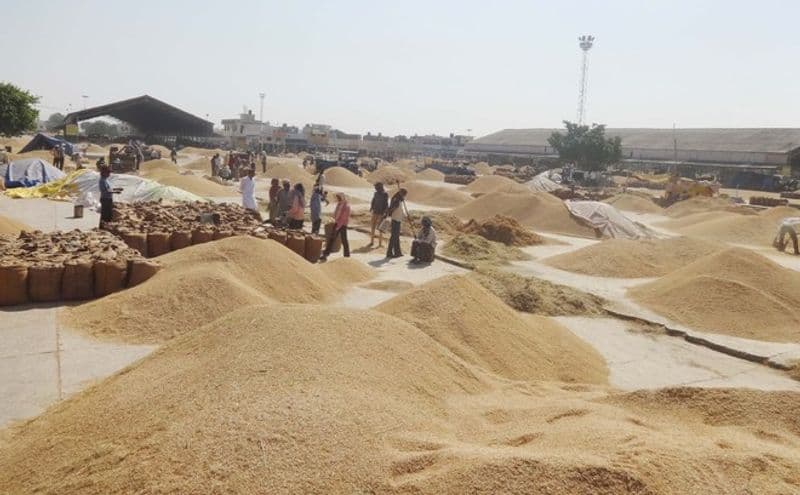
The central government has operationalised a nationwide digital portal designed to track inventories of rice and paddy across all states and union territories. Announced by the consumer affairs and food ministry, the initiative is structured to improve market transparency and check inflationary pressures on staple food items.
Mandatory Inventory Disclosures
Under a recent administrative order, entities holding stocks must report their inventories under six distinct classifications. These specified categories comprise Basmati rice, non-Basmati premium rice, standard non-Basmati rice, parboiled rice, broken rice and raw paddy.
Applicable Business Entities
The reporting mandate applies comprehensively across multiple levels of the supply chain. Wholesalers, independent traders, traditional retailers, large retail chains, grain processors and commercial millers throughout the country are legally required to comply with the directive.
Reporting Schedule and Platform
Registered units must access the designated Food Stock Portal at foodstock.dfpd.gov.in to submit their inventory figures. The order mandates that every participating holding unit update their specific stock details on the platform every single Friday.
Enforcement and Legal Penalties
Entities that fail to register on the designated portal or violate established stock holding limits will face strict regulatory enforcement. Such infractions will invite penal action under Sections 6 and 7 of the Essential Commodities Act of 1955.
Escalating Retail Rice Prices
This regulatory measure coincides with a notable acceleration in retail grain inflation. Government data indicates that retail rice inflation reached 8.25 per cent year-on-year in September, rising from 5.89 per cent recorded in August.
Market Price Levels
The average retail price for the grain hovered around Rs 48.23 per kilogram during the period. This current pricing represents an increase of approximately 12 per cent compared to price levels recorded one year earlier.
Public Distribution Adjustments
To enhance domestic availability, authorities are allocating additional grain reserves to cooperative agencies including NAFED, NCCF and Kendriya Bhandar. These entities are instructed to market the supplies as Bharat Rice while exploring varied distribution channels, with a particular focus on southern states.
Open Market Sales Expansion
The administration has simultaneously doubled its volume target for grain sales through e-auctions under the Domestic Open Market Sale Scheme for the 2026-27 period, moving the target from 25 lakh tonne up to 50 lakh tonne.
Production and Acreage Constraints
Supply management interventions have been triggered by adverse agricultural conditions affecting production. Kharif paddy acreage contracted by roughly 4 per cent down to 42.68 million hectares for 2026-27, a reduction widely attributed to deficient and uneven seasonal rainfall.
Output Projections and Supply Analysis
Trade estimates project total rice output for the 2026-27 season at approximately 147 million tonne. This volume marks a decline from the record harvest of 154 million tonne achieved during the preceding 2025-26 production cycle.
- All supply chain entities must update inventory data every Friday on the official food stock portal.
- Retail rice inflation reached 8.25 per cent year-on-year in September with average prices near Rs 48.23 per kg.
- The government doubled its Open Market Sale Scheme e-auction target to 50 lakh tonne for 2026-27 to stabilize supplies.
Spotted an error? · Our editorial policy
UP NEXTSanjay Kapoor Stars in ‘Unexpected – Safed Sach’ Based on 2024 Dehradun CaseSwipe more stories · BusinessQuick cards, a few lines each. Tap to open.More from Business

Felix Plaza in New Gurugram Expands as a Multi-Utility Retail and Entertainment Hub

Gold Drops to One-Year Low While Silver Falls Sharply Amid US Rate-Rise Expectations and Stronger Dollar

India’s Foreign Exchange Reserves Drop by $14.21 Billion to Three-Month Low